Speakers Brian Cox: Physicist

Brian Cox

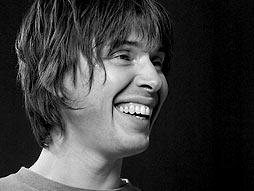
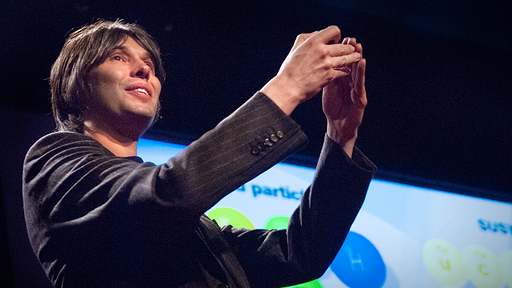
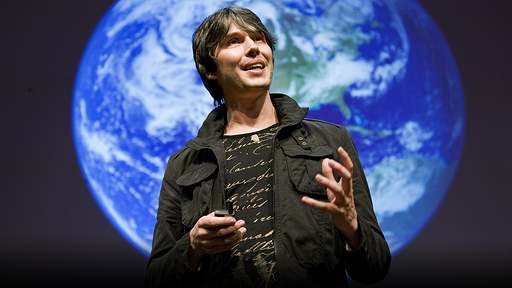
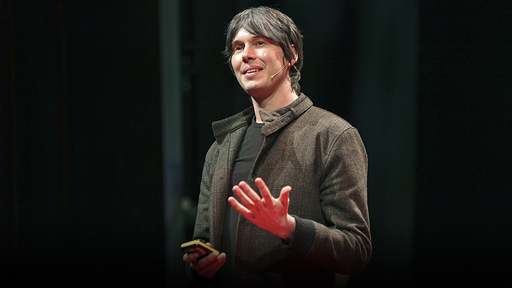
Physicist Brian Cox has two jobs: working with the Large Hadron Collider at CERN, and explaining big science to the general public. He's a professor at the University of Manchester.

Why you should listen to him:

Based at the University of Manchester, Brian Cox works at CERN in Geneva on the ATLAS experiment, studying the forward proton detectors for the Large Hadron Collider there. He's a professor at the University of Manchester, working in the High Energy Physics group, and is a research fellow of the Royal Society.

He's also become a vital voice in the UK media for explaining physics to the public. With his rockstar hair and accessible charm, he's the go-to physicist for explaining heady concepts on British TV and radio. (If you're in the UK, watch him on The Big Bang Machine.) He was the science advisor for the 2007 film Sunshine. He answers science questions every Friday on BBC6 radio's Breakfast Show.

"If people don’t have an understanding of what science is and what scientists do, then they can tend to think that global warming, for example, is just a matter of opinion."
Brian Cox in Seed magazine

Email to a friend »

Quotes by Brian Cox

  • “The aim of particle physics is to understand what everything’s made of, and how everything sticks together. By everything I mean me and you, the Earth, the Sun, the 100 billion suns in our galaxy and the 100 billion galaxies in the observable universe. Absolutely everything.”

    Watch this talk »

  • “The Large Hadron Collider is the largest scientific experiment ever attempted — 27 kilometers in circumference. Its job is to re-create the conditions that were present less than a billionth of a second after the universe began, up to 600 million times a second. It’s nothing if not ambitious.”

    Watch this talk »

  • “Nothing is so dangerous to the progress of the human mind than to assume that our views of science are ultimate, that there are no mysteries in nature, that our triumphs are complete, and that there are no new worlds to conquer.” — quoting Humphrey Davy

    Watch this talk »

  • “[The 1975 Chase Econometrics] showed that for every one dollar spent on Apollo, 14 came back into the U.S. economy.”

    Watch this talk »

  • “For the first time, we saw our world, not as a solid, immovable, kind of indestructible place, but as a very small, fragile-looking world just hanging against the blackness of space.”

    Watch this talk »

More TEDQuotes…