Speakers Brian Cox: Physicist

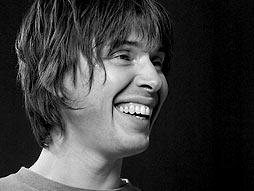
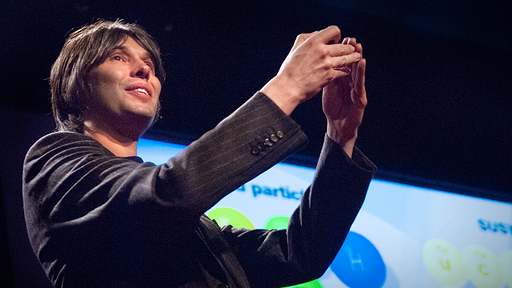
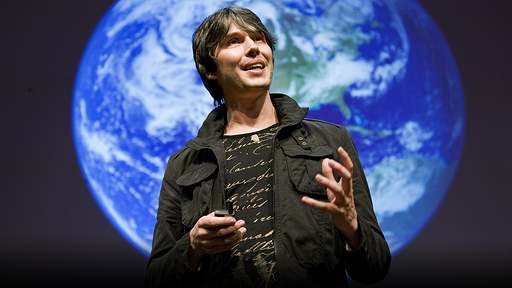
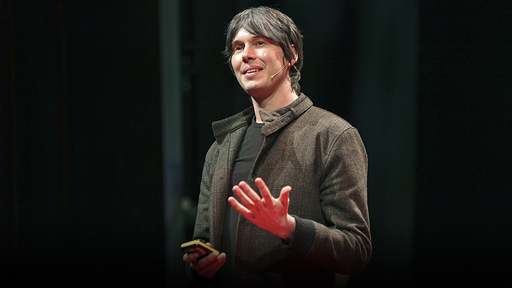
Physicist Brian Cox has two jobs: working with the Large Hadron Collider at CERN, and explaining big science to the general public.

Why you should listen to him:

Based at the University of Manchester, Brian Cox works at CERN in Geneva on the ATLAS experiment, studying the forward proton detectors for the Large Hadron Collider there. 

He’s also become a vital voice in the UK media for explaining physics to the public. With his rockstar hair and accessible manner, he’s the go-to physicist for explaining heady concepts on British TV and radio. (If you're in the UK, watch him on The Big Bang Machine.) He was the science advisor for the 2007 film Sunshine.

"If people don’t have an understanding of what science is and what scientists do, then they can tend to think that global warming, for example, is just a matter of opinion."
Brian Cox in Seed magazine

Email to a friend »

Blog Posts on TED

  • What really goes on at the Large Hadron Collider: Brian Cox on TED.com – April 29, 2008

    "Rock star physicist" Brian Cox talks about his work on the Large Hadron Collider at CERN. Discussing the biggest of big science in an engaging, accessible way, Cox brings us along on a tour of the massive complex -- and describes the vital role it's going to play in understanding our universe. (Recorded March 2008 in Monterey, California. Duration: 14:59.)


    Watch Brian Cox's talk on TED.com, where you can download it, rate it, comment on it and find other talks and performances.

    Read more about Brian Cox on TED.com.

    Read the transcript >>

    Subscribe2TEDTalks.jpg

    Embed this video: Use this code to run the video on your own site:

    More »

  • Hawking makes $100 bet that the LHC won't find Higgs – September 9, 2008

    higgs_thatcher.jpg

    Dr. Stephen Hawking has made a $100 bet that the Large Hadron Collider at CERN, which throws its first beam tomorrow, will not find the elusive particle knows as the Higgs boson. What makes the Higgs the most highly sought-after particle in physics? In his TEDTalk, Brian Cox describes the Higgs particle "in language a politician can understand": What the Higgs does is, it gives mass to the fundamental particles. The whole universe is full of something called the Higgs field, Higgs particles if you will. [Referring to the sketch above] The analogy is that these people in a room are the Higgs particles. Now, when a particle moves through the universe, it can interact with these particles. But imagine someone who's not very popular moves through the room, and everyone ignores them. They just pass through the room very quickly, essentially at the speed of light. They're massless. Now imagine someone incredibly important, and popular, and intelligent ... walks into the room, they're surrounded by people, and their passage is impeded. It's almost like they get heavy, they get massive. And that's exactly the way the Higgs mechanism works. The ... electrons and the quarks in your body, and in the universe that we see around us, are heavy, they're massive, because they're surrounded by Higgs particles. They're interacting with the Higgs field. The physicists at the LHC are looking to the Higgs particle to finally explain some mysteries of the universe. And that's why Dr. Hawking doesn't really want it to be found, he says: I think it will be much more exciting if we don't find the Higgs. That will show something is wrong, and we need to think again. I have a bet of $100 that we won't find the Higgs.

    More »

  • Delightful, unused promo for Brian Cox's next BBC2 series – November 2, 2008

    This one-minute promo video for Brian Cox's upcoming BBC2 show about time made us smile:

    The show, "Horizon: What Time Is It?" airs in the UK on Dec. 2.

    More »

  • Getting ready for Big Bang Day – September 7, 2008

    2749936677_2c23109efc_o.jpgIf all goes according to plan this week, the Large Hadron Collider at CERN in Geneva will circulate its first beam on Sept. 10 -- a step that's been compared to "switching on" the machine, but that is, as you'd expect, much more complicated than that. Once the first beam is established, the next steps, taking place later in 2008, will be to accelerate and then collide two beams, producing for an eager physics community whatever new particles they can find. You can watch the first attempt to circulate a beam in the LHC via CERN's live webcast on the day. Many universities around the world will be hosting "first beam" lectures, watch parties and even a couple of pajama parties; here's a list of first beam events in the United States, and if you know of more, drop a comment below or email contact@ted.com. To get even more psyched up for the fire-up, check out the site for the recent BBC Radio 4 program Big Bang Day, with short (funny!) videos, including a great one from TEDTalks star Brian Cox, and a look at the LHC in science fiction, from Dr. Who to Dan Brown. CERN's LHC First Beam site has even more background video and articles. And our own Bruno Giussani, TED's European Director, who lives near Geneva, has visited the LHC's tunnel during the construction and wrote a field trip report complete with pictures. Illustration of physicist Brian Cox at CERN, courtesy of Kate St. Claire, via her Flickr set

    More »

  • Brian Cox on the world's biggest experiment – June 24, 2008

    Sometime towards the end of August or possibly early September, the world's biggest and most ambitious scientific experiment will go live: the LHC, or Large Hadron Collider will be started up at CERN in Geneva. Particle physicist and TED favorite Brian Cox (watch his TED talk) has written a must-read essay explaining the science of the LHC, the questions surrounding mass, gravity and dark matter that the experiment is supposed to answer, and the hope that it will lead to "a deeper and more profound knowledge of how our world works". He also debunks claims circulating on the Internet that turning on the LHC may create black holes that could destroy the planet. My favorite quote from Brian's essay, in a paragraph where he describes the human body: "The particles have been around for the entire life of the universe. They are spending the blink of a cosmic eye in the pattern known as 'you'". And if you want to see how the LHC and its gigantic detectors and other machinery look like, here is my own report with pictures from a visit last year to the 27-km underground circular tunnel near Geneva.

    More »

  • The World Science Festival starts tomorrow – May 28, 2008

    Tomorrow, Thursday, May 29, begins the World Science Festival: a four-day celebration of scientific exploration and discovery in New York City created by TEDster Brian Greene. Members of the TED team will be liveblogging the event right here on the TED Blog, keeping you updated on the latest from many TEDTalks favorites who will be presenting there. A few events we plan to cover:

    illuminating.jpgIlluminating Genius: Unlocking Creativity: Is creativity innate or learned? Does the innovative brain have distinct structural or chemical features? Can we enhance our creativity? Vilayanur Ramachandran will contribute to this session, along with Nancy Andreasen and David Eagleman.

    parallelworlds.jpgParallel Worlds, Parallel Lives: Brian Cox will moderate a panel of physicists including Michio Kaku and Max Tegmark as they discuss the possibility of parallel worlds. The panel is to follow a screening of Parallel Worlds, Parallel Lives, a film about Hugh Everett, father of the "many-worlds interpretation" of quantum physics and the film's director, Mark Everett.

    scienceofmorality.jpgScience of Morality: Patricia Churchland, Antonio Damasio and Marc Houser join philosopher Dan Dennett in a discussion of the science of right and wrong: Why do we cooperate? Is altruism innate? How does morality arise from interactions among biological and social systems?

    lawsoflife.jpgLooking for the Laws of Life: The forms that life could take seem endless -- at least in theory. Some scientists are on the verge of creating it in a lab. But are there universal laws of life, much like the fundamental laws of physics? This event features a vibrant discussion with leading astrobiologists Paul Davies, Steven Benner and Maggie Turnbull.

    faithscience.jpgFaith & Science: Many scientists have found a way to accommodate both scientific inquiry and religious teaching in their belief systems. Other scientists are bringing science to bear on religion and spiritual belief. Actress Julia Sweeney contributes to this intimate look at what scientists have to say about their spirituality.

    For more information about event schedules and to purchase tickets, visit the World Science Festival's website.

    More »

  • Dropping mad science at the Large Hadron Collider – August 1, 2008

    Brian Cox is not the only rock star at CERN:
    CERN Rap from Will Barras on Vimeo. Read more about it here >> PLUS: The LHC just keeps on inspiring art. Check out this new collection of astonishing photos of the LHC >>

    More »