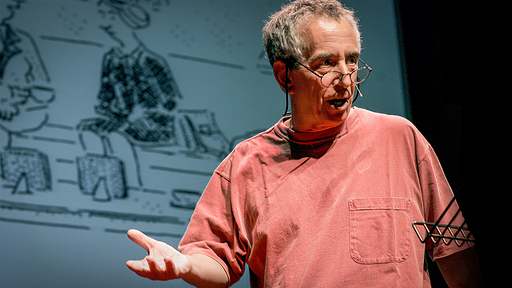
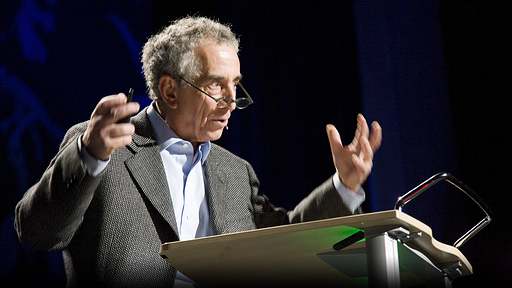
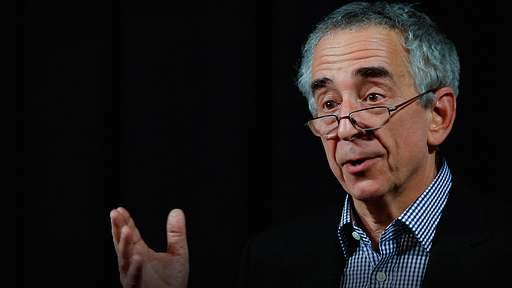
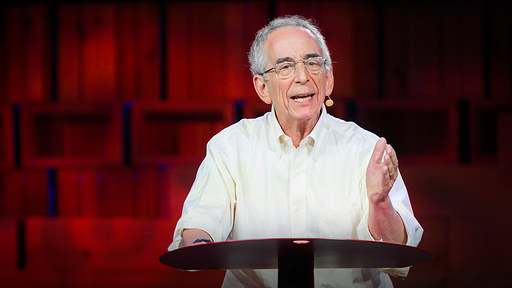
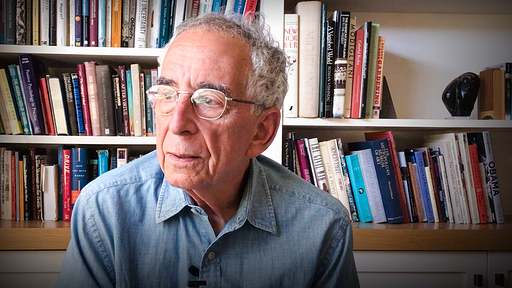
Barry Schwartz studies the relationship between economics and psychology, delivering startling insights into modern life. His latest book, The Paradox of Choice, argues that the abundance of choice in today’s western world leads not to happiness but psychological distress.
Why you should listen to him:
In his 2004 book The Paradox of Choice , Barry Schwartz tackles one of the great mysteries of modern life: Why is it that societies of great abundance — where individuals are offered more freedom and choice (personal, professional, material) than ever before — are now witnessing a near-epidemic of depression? Conventional wisdom tells us that greater choice is for the greater good, but Schwartz argues the opposite: He makes a compelling case that the abundance of choice in today’s western world is actually making us miserable.
Infinite choice is paralyzing, Schwartz argues, and exhausting to the human psyche. It leads us to set unreasonably high expectations, question our choices before we even make them and blame our failures entirely on ourselves. His relatable examples, from consumer products (jeans, TVs, salad dressings) to lifestyle choices (where to live, what job to take, who and when to marry), underscore this central point: Too much choice undermines happiness.
Schwartz’s previous research has addressed morality, decision-making and the varied inter-relationships between science and society. Before Paradox he published The Costs of Living, which traces the impact of free-market thinking on the explosion of consumerism -- and the effect of the new capitalism on social and cultural institutions that once operated above the market, such as medicine, sports, and the law.
Both books level serious criticism of modern western society, illuminating the under-reported psychological plagues of our time. But they also offer concrete ideas on addressing the problems, from a personal and societal level.
"Whether choosing a health-care plan, choosing a college class or even buying a pair of jeans, Schwartz shows that a bewildering array of choices floods our exhausted brains, ultimately restricting instead of freeing us."Publisher’s Weekly
Blog Posts on TED
-
How toddlers (and monkeys) make choices – October 26, 2007

What's the relationship between our happiness and the choices we make? TEDTalks from Barry Schwartz and Daniel Gilbert point out some paradoxes of this relationship, and the complex emotions involved in choice. Now, some new research from Yale sheds light on how toddlers and monkeys make choices. From the BPS Research Digest Blog:
Forty 4-year-olds used a scale of smiley faces to indicate how much they liked a range of animal stickers. For each child, the researchers identified three stickers which that child liked equally – let’s call these A, B, C. Each child then faced two choices – first to choose which of A or B they would like to take home. Afterwards, they then had to choose between sticker C and whichever sticker (A or B) they hadn’t selected before.
The surprising result was, faced with the second choice, the kids overwhelmingly picked sticker C -- though they'd liked all three stickers equally at first. The other surprising result was, the researchers got the same result with capuchin monkeys, who chose among three different-colored M&Ms. For more on this study, read the journal abstract or a detailed post on the blog The Proper Study of Mankind. Photo from Wikimedia: Cebus capucinus: Capuchin Monkeys Sharing Source: Powell K: Economy of the Mind. PLoS Biol 1/3/2003: e77. Photo courtesy of Frans de Waal.
-
Archive: Barry Schwartz on the paradox of choice, on TED.com – August 13, 2008
For the next week, we're presenting some of our favorite TEDTalks from among the 270+ talks and performances we've posted since June 2006. Look for brand-new TEDTalks starting August 18. Until then, enjoy these gems -- and suggest your own by writing to contact@ted.com or joining the conversation on TED.com.
Psychologist Barry Schwartz studies freedom of choice -- and has made some surprising findings. A wealth of choices, he has found, can make us not happier but more dissatisfied, not free but paralyzed. (Recorded July 2005 in Oxford, UK. Duration: 19:48)
Watch Barry Schwartz's 2005 talk on TED.com, where you can download it, rate it, comment on it and find other talks and performances from our archive of 270+ TEDTalks.
Get TED delivered:
Subscribe to the TEDTalks video podcast via RSS >>
Subscribe to the iTunes video podcast
Subscribe to the iTunes audio podcast
Subscribe to the TED Blog >>