
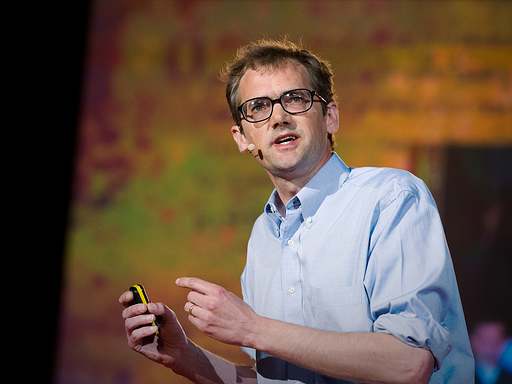
William Noel is a curator who believes museums should make their collections free and available on the Internet.
William Noel is the Curator of Manuscripts and Rare Books at the Walters Art Museum. But for someone who spends the majority of his time analyzing ancient and medieval artifacts, he also embraces social media and stresses its value even for the oldest, most established academic and cultural institutions. Noel believes passionately that institutions should free their digital data.
Since 1999 Noel has spearheaded the conservation of a manuscript known as the Archimedes Palimpsest. The palimpsest is a unique Byzantine prayer book made up of parchments which contain hidden writings from three original previously-unknown texts: treatises written by Archimedes; works by the 4th-century B.C. Attic Orator Hyperides; and 3rd-century commentary on Aristotle’s Categories, by an unknown author. Using a powerful particle accelerator Noel and his team were able to uncover the hidden texts and publish all their images and findings on the Internet, available to anyone for free under a Creative Commons license.
Noel currently lives in Baltimore, Maryland, where he curates at the Walters, working to ensure that the public has free digital access to his collection.
Read more about William Noel in the TED Blog Q&A >>
"People go to the Louvre because they’ve seen the Mona Lisa; the reason people might not be going to your institution is because they don’t know what’s in it. Digitization is a way to address that issue."William Noel
“If you want to look at medieval manuscripts on the Web, you have to go to the National Library of Y's site or the University Library of X's site, which is about the most boring way in which you can deal with digital data.”
“The Web of ancient manuscripts of the future isn't going to be built by institutions. It's going to be built by users … people who just want to curate their own glorious selection of beautiful things.”
“Why do people go to the Louvre? They go to see the Mona Lisa. Why do they go to see the Mona Lisa? Because they already know what she looks like.”