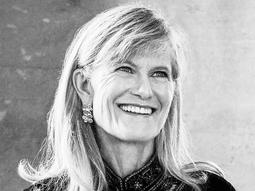
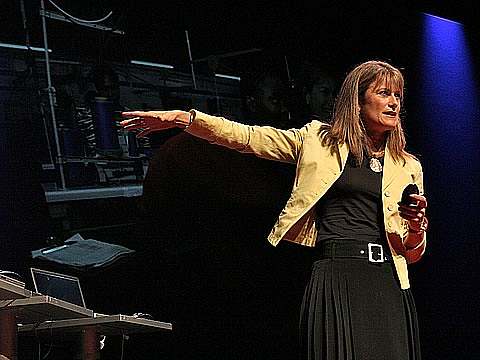
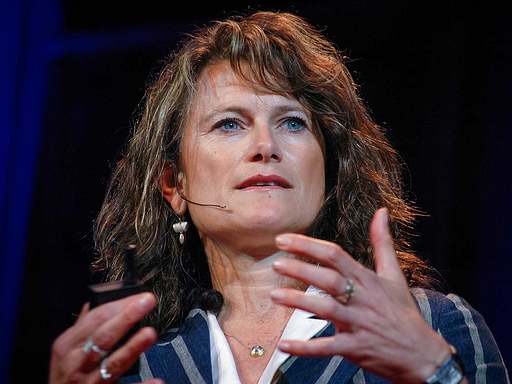
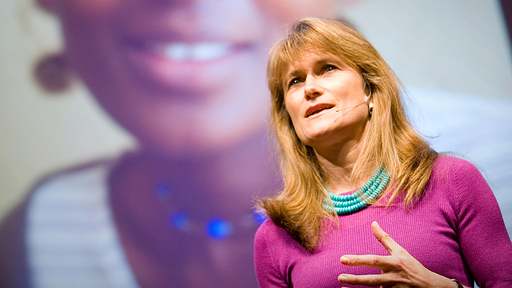
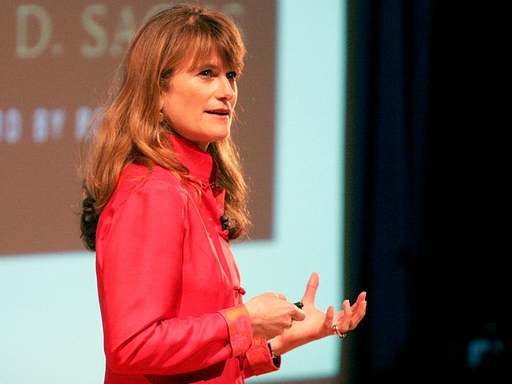
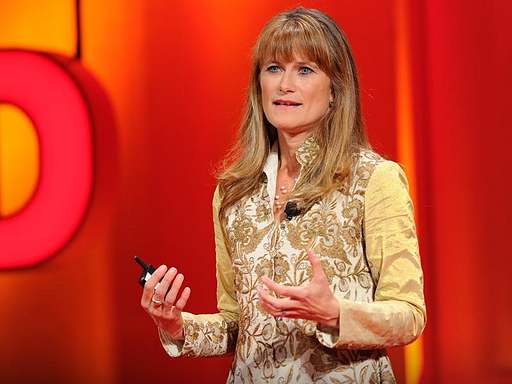
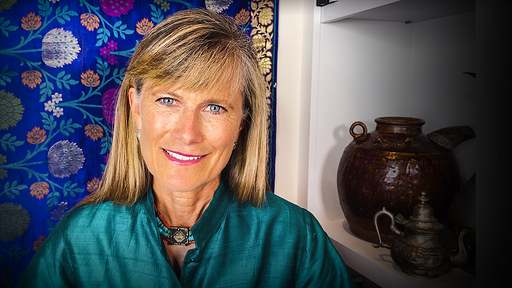
Jacqueline Novogratz founded and leads Acumen Fund, a nonprofit that takes a businesslike approach to improving the lives of the poor. She’s become a leading voice of the new philanthropy, which emphasizes sustainable bottom-up solutions over traditional top-down aid.
Why you should listen to her:
One of the most innovative players shaping philanthropy today, Jacqueline Novogratz is redefining the way problems of poverty can be solved around the world. Drawing on her past experience in banking, microfinance and traditional philanthropy, Novogratz has become a leading proponent for financing entrepreneurs and enterprises that can bring affordable clean water, housing and healthcare to poor people so that they no longer have to depend on the disappointing results and lack of accountability seen in traditional charity and old-fashioned aid.
The Acumen Fund, which she founded in 2001, has an ambitious plan: to create a blueprint for alleviating poverty using market-oriented approaches. Indeed, Acumen has more in common with a venture capital fund than a typical nonprofit. Rather than handing out grants, Acumen invests in fledgling companies and organizations that bring critical -- often life-altering -- products and services to the world’s poor. Like VCs, Acumen offers not just money, but also infrastructure and management expertise. From drip-irrigation systems in India to malaria-preventing bed nets in Tanzania to a low-cost mortgage program in Pakistan, Acumen’s portfolio offers important case studies for entrepreneurial efforts aimed at the vastly underserved market of those making less than $4/day.
It’s a fascinating model that’s shaken up philanthropy and investment communities alike. Acumen Fund manages more than $20 million in investments aimed at serving the poor. And most of their projects deliver stunning, inspiring results. Their success can be traced back to Novogratz herself, who possesses that rarest combination of business savvy and cultural sensitivity. In addition to seeking out sound business models, she places great importance on identifying solutions from within communities rather than imposing them from the outside. “People don’t want handouts," Novogratz said at TEDGlobal 2005. "They want to make their own decisions, to solve their own problems.”
"Acumen Fund is a not-for-profit group (but not a charity) that is supported by investors (not donors) who want a good “social return” on their capital."Fortune
Blog Posts on TED
-
Day Two in Quotes [TEDGlobal 2007] – June 6, 2007
“Dignity is more important to the human spirit than wealth” — Acumen Fund CEO/Founder Jacqueline Novogratz "What we call governments are vampire states, which suck the economic vitality out of the people." — Economist George Ayittey "I want to make Africans rich. If you make Africans rich, they'll be less poor. That's my development strategy." — Private equity pioneer Idris Mohammed "What we're trying to do is create a family tree for everyone alive today." — Anthropologist and geneticist Spencer Wells, who's leading the Genographic Project, a landmark study tracing human origins to their roots in Africa "There is no region of the world and no period in history that farmers have had to bear the burden of risk that African farmers bear today. But I'm not here to lament or wring my hands. I'm here to tell you that change is in the air." — Economist Eleni Gabre-Madhin, who is founding the first commodities market for farmers in Ethiopia "World progress needs a good dose of spontaneous human intelligence to realize that the answers to many of the questions we ask ourselves are just around the corner." — Architect Issa Diabete, who draws inspiration from innovative, makeshift urban solutions found in Africa's sprawling squatter cities "I'm hopeful because nature is amazing resilient. Seemingly dead tree stumps -- if you stop hacking them for firewood, in 10 years you can have a 30 ft tree.” — Primatologist and conservationist Jane Goodall “I am a mathematician and I would like to stand on your roof.” — Mathematician Ron Eglash's standard greeting to African families, when he was researching the intriguing fractal patterns observed in many villages across the continent Technorati tags: tedglobal2007 More -
Tackling poverty with "patient capital": Jacqueline Novogratz on TED.com – August 14, 2007
Jacqueline Novogratz is pioneering new ways of tackling poverty. In her view, traditional charity rarely delivers lasting results. And commercial investors are also unwilling to seed the businesses and jobs that are needed in tough conditions. Her solution, outlined through a series of revealing personal stories, is "patient capital." This means using philanthropic funds to help "bottom of the pyramid" entrepreneurs get their businesses off the ground. Listening, truly listening, is key, she says, and the marketplace is the best listening device we have. The result: sustainable jobs, goods, services -- and dignity -- for the world's poorest. (Recorded June 2007 in Arusha, Tanzania. Duration: 18:35.)
Watch Jacqueline Novogratz's talk on TED.com, where you can download it, rate it, comment on it and find other talks and performances, including her talk at TEDGlobal2005 in Oxford.
Read more about Jacqueline Novogratz on TED.com.
New: Download this talk in high resolution >>
Embed this video: Use this code to run the video on your own site:
More -
Iqbal Quadir's new Center for Development and Entrepreneurship at MIT – November 13, 2007
TEDGLOBAL2005 speaker and GrameenPhone founder Iqbal Quadir is launching a new center for Development and Entrepreneurship at MIT, thanks to a $50 million structured gift from Legatum, a Dubai-based investment firm. The Legatum Center "will help MIT students start enterprises in developing countries, to foster organic and durable economic growth and more equitable societies", Iqbal told us in an e-mail. He will act as the Center's Exec Director, while Prof. Alex Pentland, Director of the Human Dynamics research group at the MIT Media Lab, will be the Faculty Director. "We will champion bottom-up economic growth, rather than the prevalent top-down, state-led, aid-funded projects that by and large have not worked", Iqbal added. That was also at the core of his TEDGLOBAL2005 talk (on this topic, watch also the talks by Ashraf Ghani and Jacqueline Novogratz or several speakers from TEDGLOBAL2007 in Arusha). The Center's primary activity (starting next Fall) will be running a fellowship program for MIT students who intend to create scalable, socially responsible enterprises. More
-
TED.com's new discussion space: Africa: The Next Chapter – May 30, 2007
As the TED Conference team departs for Tanzania and TEDGlobal 2007, the TED.com team is beginning the conversation online, with our latest theme: Africa: The Next Chapter. We start with an observation: That while we're all familiar with Africa's challenges -- famine and disease, conflict and corruption -- it's less known that across the continent, change is afoot. A new generation of Africans -- entrepreneurial, optimistic, inventive, undaunted -- are shaping a very different future for the their homeland.
Ingenious solutions are being applied to tackle some of the toughest health and infrastructure problems. Businesses are being launched that can transform the lives of millions. New communication technologies allow ideas and information to spread, enabling markets -- and governments -- to be more efficient. The numbers suggest that real growth is on the way ... A new Africa beckons.
Next week, we hold our first conference in Africa (also titled "Africa: The Next Chapter") to learn all we can about the profound changes sweeping the continent. Thought leaders from across Africa will gather with counterparts from the west in hopes of building new and lasting collaborations. But the meeting in real time is only the beginning: It's the conversations and connections that continue online which will have even deeper reverberations.
Though the talks from TEDGlobal won't be online till midsummer, we've started the conversation off with several relevant talks from TEDs past, including Ngozi Okonjo-Iweala, the pioneering Nigerian Finance Minister, who captures the zeitgeist of the moment with a talk on rethinking the African economy. It dovetails nicely with Jacqueline Novogratz, who promotes a new approach to philanthropy, based on investment rather than traditional aid. Both those thoughts were echoed by Ashraf Ghani, former Finance Minister of Afghanistan, whose rousing talk on his country's future resonates with this theme, despite geographical distance. And then there's Bono, whose memorable 2005 TED Prize acceptance speech was the original inspiration for the conference (though many there may disagree with his approach).
Click here to go to TED.com's new Theme, Africa: The Next Chapter >>
More -
CARE Turns Down Federal Money for Aid and Turns to Investing – August 20, 2007
TEDsters have already heard this story -- from speakers Iqbal Quadir, Ngozi Okonjo-Iweala, Ashraf Ghani, Jacqueline Novogratz, and several others at last June's TEDGLOBAL in Tanzania: developing countries need investments more than aid. One of the world's biggest charities has now acted upon this idea. CARE, writes the New York Times, is turning down some $45 million a year in US federal financing, saying American food aid is not only plagued with inefficiencies, but also may hurt some of the very poor people it aims to help. CARE says it will phase out by 2009 the practice of selling state-subsidized American farm products in African countries that in some cases compete with the crops of struggling local farmers (watch Jacqueline's speech for a parallel take on how donated clothes compete with local textile production). The move is controversial -- other charities are defending the current system -- but CARE has already started investing in local companies. Read the full NYT story. More


