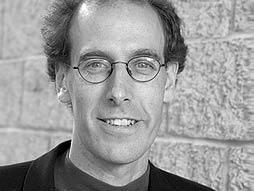
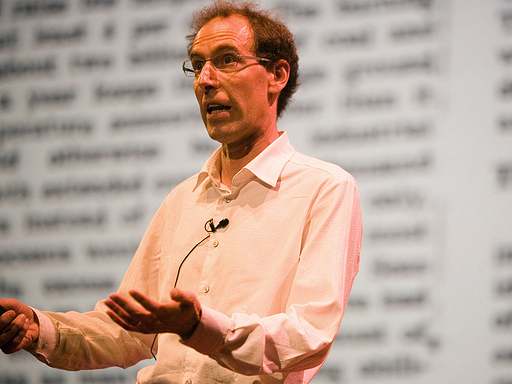
David Keith studies our climate, and the many ideas we've come up with to fix it. A wildly original thinker, he challenges us to look at climate solutions that may seem daring, sometimes even shocking.
Why you should listen to him:
Environmental scientist David Keith works at the intersection of climate science, way-new energy, and public power. His research has taken him into some far-out realms of geoengineering -- dramatic, cheap, sometimes shocking solutions to a warming atmosphere, such as blowing a Mt. Pinatubo-size cloud of sulfur into the sky to bring the global temperature down.
His other areas of study include the capture and storage of CO2 , the economics and climatic impacts of large-scale wind power , and the use of hydrogen as a transportation fuel. Another interest: How we make decisions when we don't have reliable scholarly data.
He teaches at the University of Calgary, and was named Environmental Scientist of the Year by Canadian Geographic in 2006.
"[Keith is] an original thinker in the field of climate science and one of the world's most accomplished energy-policy analysts"Cabadian Geographic
Blog Posts on TED
-
Geo-engineering to slow global warming: David Keith on TED.com – November 13, 2007
Environmental scientist David Keith talks about a cheap, effective, shocking solution to climate change: What if we injected a huge cloud of particles into the atmosphere, to deflect sunlight and heat? As an emergency measure to slow a melting ice cap, it could work. Keith discusses why geo-engineering like this is a good idea, why it's a terrible one -- and who, despite the cost, might be tempted to use it. (Recorded September 2007 in New York City. Duration: 16:04.)
Watch David Keith's talk on TED.com, where you can download it, rate it, comment on it and find other talks and performances.
Read more about David Keith on TED.com.
Embed this video: Use this code to run the video on your own site:
More -
Notes from the TED Salon: "Hot Science: Radical Ideas to Combat the Climate Crisis" – September 27, 2007
Last night in New York City, 250 TEDsters gathered to hear some radical proposals for outsmarting climate change. It's a fact: Atmospheric carbon dioxide levels are rising, and with them the possibility of severe climate change within our lifetimes. Increasingly, scientists are considering extreme measures that can quickly suck CO2 out of the atmosphere to reverse the heat buildup that could cause global warming. And so, with our sponsors, BMW and Conde Nast Portfolio magazine, TED hosted a salon on climate change. The goal: Inspire a debate that goes beyond conventional rhetoric, and explore some radical scientific solutions that just might be ideas worth spreading ... Guest host Stephen Petranek began the night with a spirit of discovery. Seen from one angle, "global warming is a very simple chemistry problem," he said, and removing CO2 from the air shouldn't actually be that hard. In exploring the problem of climate change, his search for solutions (and speakers) turned up a wide range of unconventional thinkers and remarkable ideas -- all of which are within the realm of near-term possibility. First up: Michael Oppenheimer (pictured above), former chief scientist at the Environmental Defense Fund, who was one of first to sound the warning about global warming. "I'm the depressing and immobilizing part of the program," he joked. "I don't propose any solutions .... So pop your Prozac and let's go." Oppenheimer set up the evening by demonstrating the overwhelming evidence that "pervasive climate change is already under way" and "further warming is physically inevitable." (For a refresher on the causes of climate change, and the role of carbon dioxide, there's no better primer than Al Gore's An Inconvenient Truth). Physicist Martin Hoffert took the stage next. A staunch advocate for getting off fossil fuels, Hoffert takes what might fairly be called an expansive approach to alternative energy, urging the systematic use of all our planet's available energy sources: not only the wind and the sun, but ultimately all the star-power in our galaxy. Viewed from this angle, our singular focus on earth-bound fossil fuels seems not just misguided, but small-minded: "We're relying on sources that represent only an infinitesimal portion of available energy," Hoffert said. His proposals -- which range from wind farms (like the one atop the original Freedom Tower design) to a global power grid for collecting and distributing solar power, to an idea ("usually considered pretty far out ... but maybe not for this audience") for collecting solar power from space -- all push the limits on conventional thinking and urged us, essentially, to think bigger. Now, just as the evening's speakers are all testing the edge of science, performer Sxip Shirey is pushing the edge of music. A circus composer and all-round showman, Shirey uses bowls and marbles, music boxes, bells and whistles to create beautiful, otherworldly sounds unlike anything you've heard. His short piece, "Pandora" -- beautiful, haunting, eerie, sexy, mind-bending in its own right -- provided a bit of mental cross-training, mid-evening. Murmurs of "How does he do that?" could be heard through the crowd ... Next, environmental scientist David Keith put forth another controversial solution: What if we injected levitated particles (likely sulfurous) into the middle atmosphere, to deflect sunlight and heat? The method is "absurdly cheap," mimics a natural process that occurs when volcanoes erupt, and could be deployed in a localized fashion above the poles, as an emergency measure to slow a melting ice cap. Now, this might may not be a GOOD idea, Keith warns. But it's crucial that it enters the realm of public discourse. The idea has been around since the Johnson administration, but public debate has been squelched for a number of reasons, including this central problem: The knowledge that geo-engineering is possible makes climate change less fearsome, and reduces the political will to cut emissions (which we must do). "This is what economists cause a moral hazard," Keith concludes. But it's no reason to avoid a discussion: "We don't make good policy decisions by hiding things in a drawer." The next speaker, Russ George, brought our focus down from the stratosphere and into the oceans, where climate change and rising CO2 levels have caused a dramatic loss of ocean productivity, particularly in the southern hemisphere. George focused on the disappearance of plankton blooms along the water's surface (think of them as ocean forests). His proposal: the controlled release of iron filings in the Pacific to stimulate a plankton bloom, and therefore increase uptake of atmospheric carbon dioxide. George's firm, Planktos, would then sell carbon offsets, based on the productivity of the "iron bloom." Like Keith's solution (injecting particles into the atmosphere), this approach mimics a natural process caused when dust storms swirl out over the sea. And it similarly (let's face it) triggers serious concern about unintended consequences. The evening's final speaker, TED veteran Juan Enriquez, offered us a glimpse at some ground-breaking research to explore the potential of bioenergy. He looked at the way our current energy sources -- coal, oil, gas -- are ultimately derived from ancient plants, and are in some way "concentrated sunlight." Can we learn from that process and accelerate it? Can we apply biological principles to the problem of fuel creation? Can we get to the point where we grow our own energy as efficiently as we grow wheat? Looking at a photo of a pile of surplus grain, he notes, "That would probably be a good outcome for energy." After five provocative speakers, and many more mind-bending proposals, Stephen Petranek neatly summed up the thoughts swirling through all of our minds: "Humans are at a place in their history when we can actually engineer our own planet and fool mother nature," he reflected. And while we must be absolutely mindful of the unintended consequences (they inevitably occur), "It's incredibly uplifting to know we can control our own destiny." The talks from this Salon will be made available on TED.com over the months to come. Photo of Michael Oppenheimer by Myrna Suarez, Condé Nast Portfolio More
-
Quotes from the TED Salon – September 27, 2007
Last night in Manhattan, TED hosted its 2007 Salon, called "Hot Science: Radical Ideas to Combat the Climate Crisis." A detailed roundup is coming later today -- but first, a few quotes from last night: The first speaker, Michael Oppenheimer, began by saying: "I'm the depressing, immobilizing part of the talk." He went on to make this point: While Hurricane Katrina can't be directly tied to climate change, it did teach us one thing:
You can't count on the government to save you from global warming. They're still inept to this day, and half an American city is gone, and how the hell are we going to deal with this? And what are we doing instead?
He puts up a devastating slide of the hyperdevelopment on the beach at Atlantic City -- which would lose 100 feet of beachfront if global sea levels rise 1 foot, as they will.
Alternative energy expert Martin Hoffert is a staunch advocate for getting off fossil fuels altogether. He spun out one scenario:Let me say a few words about space solar power. The advantage of putting solar collectors in orbit: The sun is basically shining 24/7. We already have thousands of satellites up there -- suppose you could build a transmitting antenna in orbit that would beam energy down to collectors, beaming energy using lasers (not microwaves) from geostationary orbit? We could send it up in one launch vehicle, and power a village, maybe in Africa, to demonstrate the viability of solar power. We could do this in 3 to 5 years.
Environmental scientist David Keith talked about geoengineering -- dramatic, cheap solutions to a warming atmosphere, such as blowing a Mt. Pinatubo-size cloud of sulfur into the sky to bring the global temperature down. Such ideas seem overly dramatic, and even immoral, but they are out there, and he argues:
We should move this out of the shadows and talk about this seriously, because sooner or later we will be confronted with a decision on this. We would do [geoengineering] instead of cutting emissions, instead of mitigation, because it's cheaper. It's very cheap. It's not a GOOD idea, but that's how big the [incentive] is. That is not in dispute, though we might argue over the sanity of it ...
Russ George, the chief scientist of Planktos, offered a way to think about all the factors contributing to the larger issue of climate change:
We have a bunch of aberrant applications in this planet, jamming a lot of errors against that primary operating system, and it's threatening to reboot and give us that blue screen of death, threatening a reboot back to 16 million years ago.
Juan Enriquez (pictured above) talked about how much of our energy, such as coal and oil -- made from ancient plants -- is simply "concentrated sunlight." How can we get to the point where we grow our own energy as efficiently as we grow wheat? Looking at a photo of a pile of surplus grain, Enriquez notes:
That would probably be a good outcome for energy.
Photo of Juan Enriquez by Myrna Suarez, Condé Nast Portfolio More -
TED Salon: Further reading – September 29, 2007
Some selected source material and references from Wednesday night's TED Salon: David Keith (pictured, left) showed a New York Times editorial on the coming climate change -- from May 24, 1953:
How Industry May Change Climate
The amount of carbon dioxide in the air will double by the year 2080 and raise the temperature an average of at least 4 per cent. The burning of about two billion tons of coal and oil a year keeps the average ground temperature somewhat higher than it would otherwise be. ...Within the NYTimes archive, we found a related story from 1953:
The Weather Is Really Changing
Studies confirm that feeling you've had that summers are getting warmer. So are our winters. But atmosphere, not atoms, is to blame.
A few other historical sources Keith referred to:
+ Changing Climate, by the Carbon Dioxide Assessment Committee, U.S. National Research Council, 1983
+ Restoring the Quality of Our Environment, Report of the Environmental Pollution Panel, President’s Science Advisory Committee, The White House, December 1965 Martin Hoffert discussed the Kardashev scale -- a ranking of civilizations based on the kinds of energy they use. Earth is still at the bottom of this scale -- we're just using whatever we find lying around on the planet. More advanced civilizations in the universe, Kardashev theorizes, will begin to harvest and grow power using all the resources of their star system and of the universe. Hoffert shows us one step toward star power: solar energy via satellite. Juan Enriquez talked about two scientists whose work could point the way to a new future of energy. As an inspiration, he points to Norman Borlaug, called "the Father of the Green Revolution." Borlaug developed optimized strains of wheat that, quite literally, now feed the world. He brought a biological, a scientific approach to agriculture that allowed it to leap beyond the boundaries of traditional "brute force" farming -- to become efficient, dependable and more productive by orders of magnitude. Enriquez' next scientist-hero is Hamilton Smith, who shared the 1978 Nobel Prize in Medicine for his work in manipulating DNA. Is Smith, or someone like him, the person who will help energy make the great leap forward that farming has? Photo of David Keith by Myrna Suarez, Condé Nast Portfolio More

