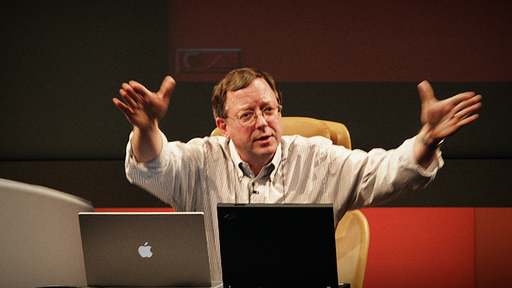
When he was editor-in-chief of Discover magazine, Stephen Petranek tangled with questions as big as the universe. Here he confronts the biggest question on the planet: What are the 10 most likely ways that life on the Earth could end?
Stephen Petranek was the editor-in-chief of Discover magazine when he became fascinated by the dangers that face the human race. He has become an eloquent advocate for making policy decisions based on an unflinching look at our worst fears.
Although his apocalyptic predictions may seem dire and inevitable, he argues precisely the opposite, and presents plausible goals that will defuse most of these catastrophes. Just in case that isn't enough, he makes the case for humankind adopting a forward-looking policy of space exploration and colonization to get us out of here alive. For the first time in history, he argues, humans can control many of the threats to survival both on and off the planet.
Petranek is now the editorial director of the Weider History Group, a collection of history magazines, and is working on a book titled The Flood, which warns of the impending danger posed to American cities by climate change and its attendant rising sea levels.
“Everything that we need to make an atmosphere on Mars, and to make a livable planet on Mars, is probably there.”
“Somewhere in the Amazon forest is the marginal tree. You cut down that tree, the rain forest collapses as an ecosystem.”
“We are all much healthier than we were 20 years ago, but mentally, we’re falling apart. The World Health Organization now estimates that one out of five people on the planet is clinically depressed.”
“We don’t really have mental health insurance in this country [the United States], and it’s really a crime.”
“We give antibiotics to every cow, every lamb, every chicken. … This is like being at war, and giving somebody your secret code. We’re telling the germs out there how to fight us.”