Why you should listen
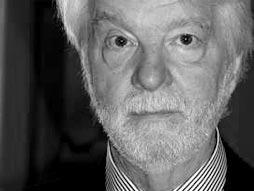
Robert Lee Hotz is the science columnist for the Wall Street Journal, where he explores the world of new research and its impact on society. In his column, he ranges broadly across the research horizon, from climate change, cosmology and molecular medicine, to evolution, neuroeconomics and new insights into the human brain. Hotz was a Pulitzer Prize finalist in 1986 for his coverage of genetic engineering issues, and again in 2004 for his coverage of the space shuttle Columbia accident. Mr. Hotz shared in The Los Angeles Times’ 1995 Pulitzer Prize for articles about the Northridge Earthquake.
Hotz is a director of the Alicia Patterson Foundation, which funds independent journalism projects around the world, and a distinguished writer in residence at New York University. He is the author of Designs on Life, Exploring the New Frontiers of Human Fertility, and a contributor to several books on research issues.