

Tech
15 years of drones at TED, in five GIFs
Watch how drones have been presented on the TED stage in various ways over 15 years.
Continue reading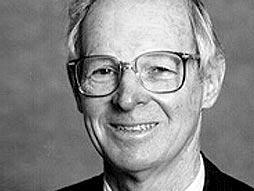
Through his life, Paul MacCready turned his mind, energy and heart toward his two passions: flight and the Earth. His early training as a fighter and glider pilot (glider pilots still use the "MacCready speed ring" he developed after World War II) led him to explore nontraditional flight and nontraditional energy sources.
In the 1970s, he and his company, AeroVironment, designed and built two record-breaking human-powered planes: the Gossamer Condor, the first human-powered aircraft to complete a one-mile course set by the Kremer Prize, and the Gossamer Albatross, the first to cross the English Channel. The planes' avian names reveal the deep insight that MacCready brought to the challenge -- that large birds, in their wing shape and flying style, possess an elegant secret of flight.
He then turned his wide-ranging mind toward environmentally responsible design, informed by his belief that human expansion poses a grave threat to the natural world. His team at AeroVironment prototyped an electric car that became General Motors' pioneering EV-1. They explored alternative energy sources, including building-top wind turbines. And they developed a fleet of fascinating aircraft -- including his Helios solar-powered glider, built to fly in the very top 2 percent of Earth's atmosphere, and the 2005 Global Observer, the first unmanned plane powered by hydrogen cells.
Watch how drones have been presented on the TED stage in various ways over 15 years.
Continue readingT.G.I.M.B.O.E.J. stands for The Great Internet Migratory Box Of Electronic Junk, and it’s celebrating its first anniversary this week. Do think of it as partly a social experiment, but more so a free-range parcel service-based electronics grab bag that circulates among hardware hackers who are eager to discover useful, cool, old, or even rare treasures […]
Continue readingIn 1998, aircraft designer Paul MacCready shares his vision of an earth out of balance, and talks about the steps he’s taking in his own work to help solve it — by building amazing solar airplanes, superefficient gliders and an electric car. It’s a stirring vision of how all of us, no matter what our […]
Continue reading