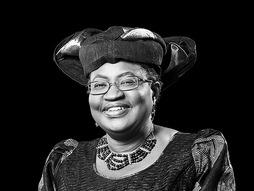
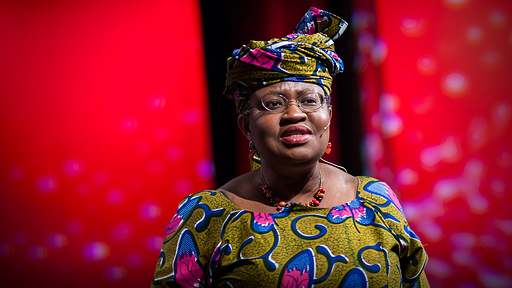
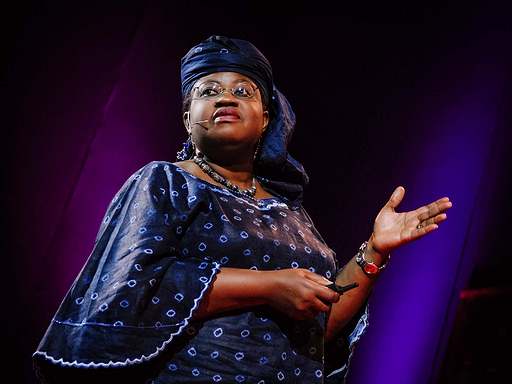
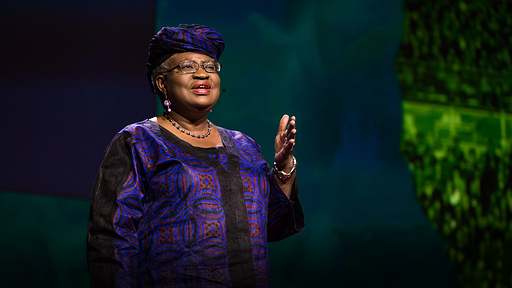
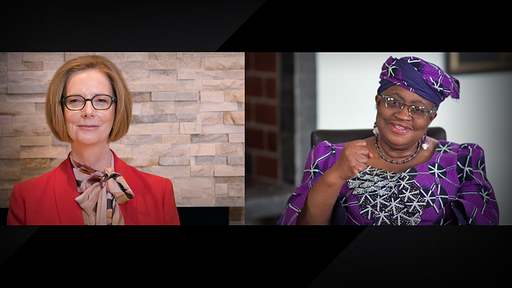
As the first female Finance Minister in Nigeria, Ngozi Okonjo-Iweala attacked corruption to make the country more desirable for foreign investment and job creation. Now as a director of the World Bank and head of the Makeda Fund, she works for change in all of Africa.
Ngozi Okonjo-Iweala, a director of the World Bank, was Nigeria's Finance Minister and then briefly Foreign Affairs Minister from 2003 to 2006, the first woman to hold either position.
During her tenure as Finance Minister, she worked to combat corruption, make Nigeria's finances more transparent, and institute reforms to make the nation's economy more hospitable to foreign investment. The government unlinked its budget from the price of oil, its main export, to lessen perennial cashflow crises, and got oil companies to publish how much they pay the government.
Since 2003 -- when watchdog group Transparency International rated Nigeria "the most corrupt place on Earth" -- the nation has made headway recovering stolen assets and jailing hundreds of people engaged in international Internet 419 scams.
Okonjo-Iweala is a former World Bank vice president who graduated from Harvard and earned a Ph.D. in regional economics and development at MIT. Her son Uzodinma Iweala is the celebrated young author of Beasts of No Nation.
"Ngozi Okonjo-Iweala is a heroine not just of Nigeria, but of the entire continent. Her crusade against corruption has put her life at risk."The Independent (UK)
“[Africa] is a continent of many countries, not one country. If we are down to three or four conflicts, it means that there are plenty of opportunities to invest in stable, growing, exciting economies where there’s plenty of opportunity.”
“I’m standing here saying that those who miss the boat now, will miss it forever. So if you want to be in Africa, think about investing.”
“The best way to help Africans today is to help them to stand on their own feet. And the best way to do that is by helping create jobs.”
“Today, the European Union is busy transferring aid. If they can build infrastructure in Spain, roads, highways … why do they refuse to use the same aid to build the same infrastructure in our countries?”
“When you save the life of anyone, a farmer, a teacher, a mother, they are contributing productively into the economy.”