Speakers Jonathan Haidt: Social psychologist

Jonathan Haidt

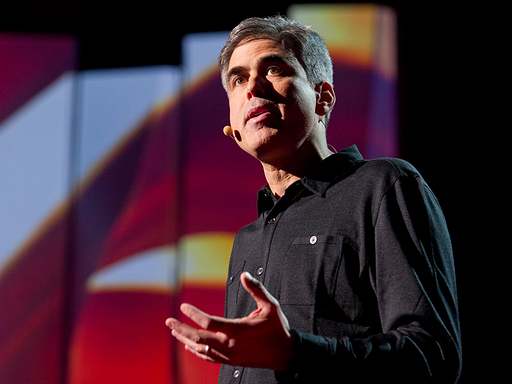
Jonathan Haidt studies how -- and why -- we evolved to be moral. By understanding more about our moral roots, his hope is that we can learn to be civil and open-minded.

Why you should listen to him:

Haidt is a social psychologist whose research on morality across cultures led up to his much-quoted 2008 TEDTalk on the psychological roots of the American culture war. He asks, "Can't we all disagree more constructively?" In September 2009, Jonathan Haidt spoke to the TED Blog about the moral psychology behind the healthcare debate in the United States. He's also active in the study of positive psychology and human flourishing.

At TED2012 he explored the intersection of his work on morality with his work on happiness to talk about “hive psychology” – the ability that humans have to lose themselves in groups pursuing larger projects, almost like bees in a hive. This hivish ability Is crucial, he argues, for understanding the origins of morality, politics, and religion. These are ideas that Haidt develops at greater length in his new book, The Righteous Mind: Why Good People are Divided by Politics and Religion. Learn more about his drive for a more productive and civil politics on his website CivilPolitics.org. And take an eye-opening quiz about your own morals at YourMorals.org

During the bruising 2012 political season, Haidt was invited to speak at TEDxMidAtlantic on the topic of civility. He developed the metaphor of The Asteroids Club to embody how we can reach. common groun. Learn how to start your own Asteroids Club at www.AsteroidsClub.org.

Watch Haidt talk about the Asteroids Club on MSNBC's The Cycle >>

Email to a friend »

Quotes by Jonathan Haidt

  • “If our goal is to understand the world, to seek a deeper understanding of the world, our general lack of moral diversity here is going to make it harder. Because when people all share values, when people all share morals, they become a team.”

    Watch this talk »

  • “The initial organization of the brain does not depend that much on experience. Nature provides a first draft, which experience then revises.” — quoting scientist Gary Marcus

    Watch this talk »

  • “Sports is to war as pornography is to sex. We get to exercise some ancient, ancient drives.”

    Watch this talk »

  • “Purity’s not just about suppressing female sexuality. It’s about any kind of ideology, any kind of idea that tells you that you can attain virtue by controlling what you do with your body, by controlling what you put into your body.”

    Watch this talk »

  • “While the political right may moralize sex, the political left is doing it with food. Food is becoming extremely moralized nowadays, and a lot of it is ideas about purity, about what you’re willing to touch, or put into your body.”

    Watch this talk »

  • “The great conservative insight is that order is really hard to achieve. It’s really precious, and it’s really easy to lose.”

    Watch this talk »

  • “If you want the truth to stand clear before you, never be for or against. The struggle between for and against is the mind’s worst disease.” — quoting Zen master Seng-ts’an

    Watch this talk »

  • “The most powerful force ever known on this planet is human cooperation — a force for construction and destruction.”

    Watch this talk »

  • “It's a basic fact about being human that sometimes the self seems to just melt away.”

    Watch this talk »

  • “[Politics is] about the eternal struggle between good and evil, and we all believe we're on the good team.”

    Watch this talk »

  • “Our tragedy is that in these hyper-partisan times, the mere fact that one side says, ‘Look, there's [a problem],’ means that the other side's going to say, ‘Huh? What? No, I'm not even going to look up.’”

    Watch this talk »

  • “Trying to run Congress without human relationships is like trying to run a car without motor oil. Should we be surprised when the whole thing freezes up?”

    Watch this talk »

  • “Morality binds and blinds. It binds us into teams … but thereby makes us go blind to objective reality.”

    Watch this talk »

  • “Most of the people going to Congress are good, hard-working, intelligent people who really want to solve problems. But once they get there, they find that they are forced to play a game that rewards hyper-partisanship and that punishes independent thinking.”

    Watch this talk »

More TEDQuotes…