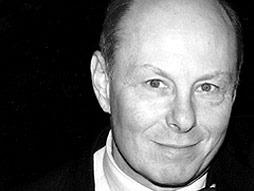
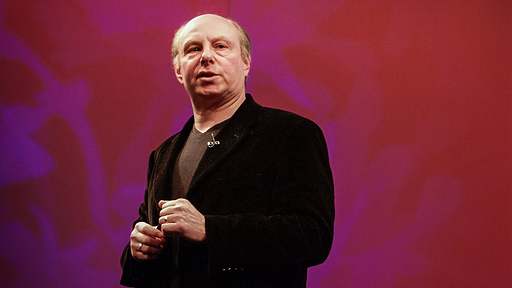
James Howard Kunstler may be the world’s most outspoken critic of suburban sprawl. He believes the end of the fossil fuels era will soon force a return to smaller-scale, agrarian communities -- and an overhaul of the most destructive features of postwar society.
James Howard Kunstler calls suburban sprawl "the greatest misallocation of resources the world has ever known." His arguments bring a new lens to urban development, drawing clear connections between physical spaces and cultural vitality.
Geography of Nowhere, published in 1993, presented a grim vision of America in decline -- a nation of cookie-cutter strip malls, vacuous city centers, and dead spaces wrought by what Kunstler calls the ethos of Happy Motoring: our society-wide dependence on the automobile.
The Long Emergency (2005) takes a hard look at energy dependency, arguing that the end of the fossil fuels era will force a return to smaller-scale, agrarian-focused communities and an overhaul of many of the most prominent and destructive features of postwar society.
His confrontational approach and propensity for doomsday scenarios make Kunstler a lightning rod for controversy and critics. But his magnificent rants are underscored with logic and his books are widely read, particularly by architectural critics and urban planners.
"The upside of Kunstler's anger is that he's getting people to sit up and take notice."Outside magazine
“The immersive ugliness of our everyday environments in America is entropy made visible.”
“I like to call it ‘the national automobile slum.’ You can call it suburban sprawl. I think it’s appropriate to call it the greatest misallocation of resources in the history of the world.”
“The public realm in America has two roles: it is the dwelling place of our civilization and our civic life, and it is the physical manifestation of the common good. When you degrade the public realm, you will automatically degrade the quality of your civic life and the character of all the enactments of your public life and communal life that take place there.”