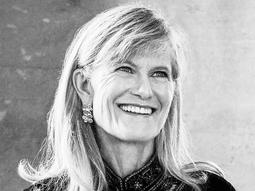
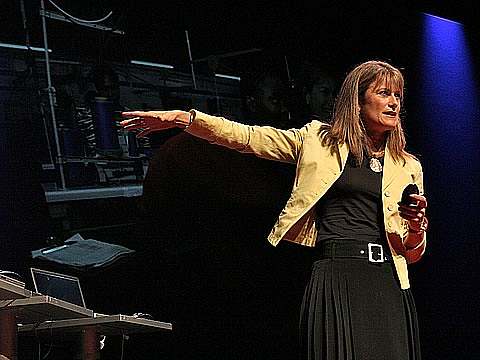
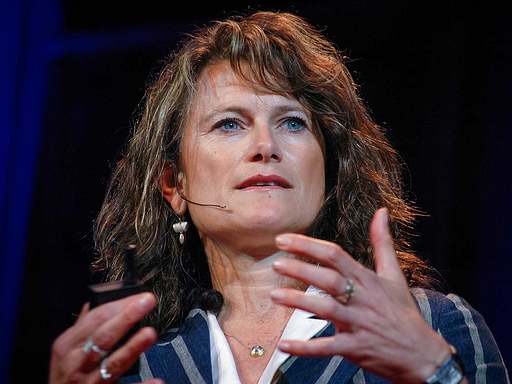
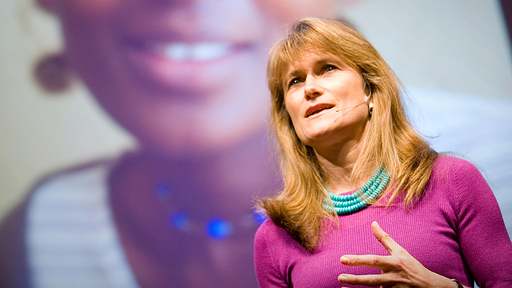
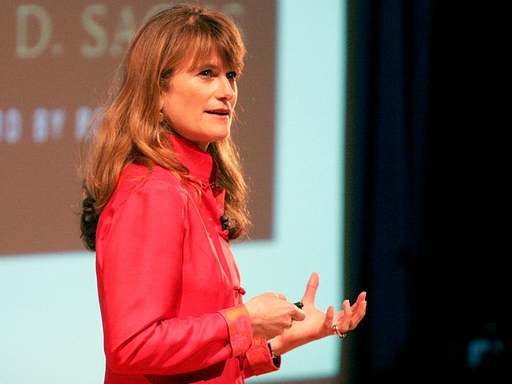
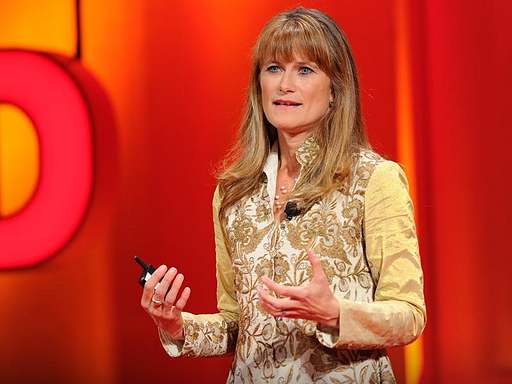
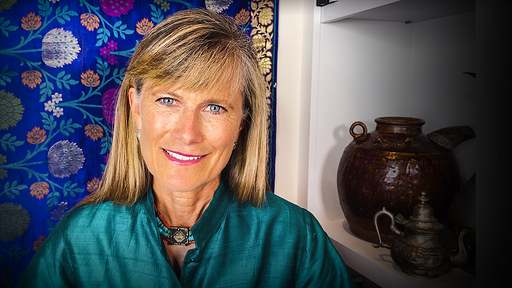

Jacqueline Novogratz founded and leads Acumen Fund, a nonprofit that takes a businesslike approach to improving the lives of the poor. In her new book, The Blue Sweater, she tells stories from the new philanthropy, which emphasizes sustainable bottom-up solutions over traditional top-down aid.
One of the most innovative players shaping philanthropy today, Jacqueline Novogratz is redefining the way problems of poverty can be solved around the world. Drawing on her past experience in banking, microfinance and traditional philanthropy, Novogratz has become a leading proponent for financing entrepreneurs and enterprises that can bring affordable clean water, housing and healthcare to poor people so that they no longer have to depend on the disappointing results and lack of accountability seen in traditional charity and old-fashioned aid.
The Acumen Fund, which she founded in 2001, has an ambitious plan: to create a blueprint for alleviating poverty using market-oriented approaches. Indeed, Acumen has more in common with a venture capital fund than a typical nonprofit. Rather than handing out grants, Acumen invests in fledgling companies and organizations that bring critical -- often life-altering -- products and services to the world's poor. Like VCs, Acumen offers not just money, but also infrastructure and management expertise. From drip-irrigation systems in India to malaria-preventing bed nets in Tanzania to a low-cost mortgage program in Pakistan, Acumen's portfolio offers important case studies for entrepreneurial efforts aimed at the vastly underserved market of those making less than $4/day.
It's a fascinating model that's shaken up philanthropy and investment communities alike. Acumen Fund manages more than $20 million in investments aimed at serving the poor. And most of their projects deliver stunning, inspiring results. Their success can be traced back to Novogratz herself, who possesses that rarest combination of business savvy and cultural sensitivity. In addition to seeking out sound business models, she places great importance on identifying solutions from within communities rather than imposing them from the outside. “People don't want handouts," Novogratz said at TEDGlobal 2005. "They want to make their own decisions, to solve their own problems.”
In her new book, The Blue Sweater, she tells stories from the new philanthropy, which emphasizes sustainable bottom-up solutions over traditional top-down aid.
"Acumen Fund is a not-for-profit group (but not a charity) that is supported by investors (not donors) who want a good “social return” on their capital."Fortune
“People really don’t want handouts, they want to make their own decisions; they want to solve their own problems.”
“We can send people to the Moon; we can see if there’s life on Mars — why can’t we get $5 [mosquito] nets to 500 million people?”
“We so often don’t realize what our action and our inaction does to people we think we will never see and never know.”
“Failure can be an incredibly motivating force.”
“Listening is not only about waiting, but it’s also learning how better to ask questions.”
“When we were walking through the narrow alleys [of the Mathare Valley slums], it was literally impossible not to step in the raw sewage and the garbage alongside the little homes. But at the same time it was also impossible not to see the human vitality, the aspiration and the ambition of the people who live there.”
“My dreams don’t look exactly like I thought they would when I was a little girl. But if I think about it, I thought I wanted a husband, but what I really wanted was a family that was loving.”— quoting Jane, a Kenyan single mother of seven
“At the end of the day, dignity is more important to the human spirit than wealth.”
“So many low income people have seen so many failed promises broken and seen so many quacks and sporadic medicines offered to them that building trust takes a lot of time, takes a lot of patience.”
“I’ve heard it said that the most dangerous animal on the planet is the adolescent male.”
“Our leaders and ourselves want everything, but we don’t talk about the costs.”
“We have to remember that the girls and the women are most isolated and violated and victimized and made invisible in those very societies where our men and our boys feel disempowered, unable to provide.”
“What we really yearn for as human beings is to be visible to each other.”
“Your job is not to be perfect. Your job is only to be human.”