Speakers Daniel Kahneman: Behavioral economics founder

Daniel Kahneman

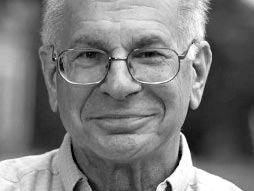
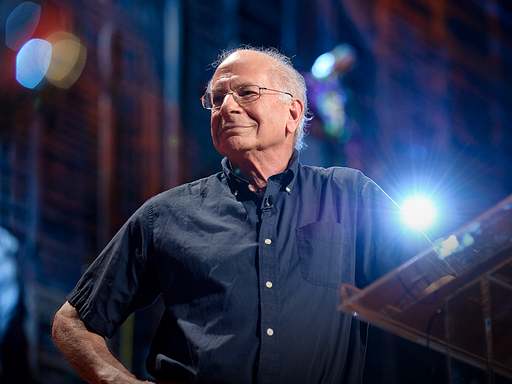
Widely regarded as the world's most influential living psychologist, Daniel Kahneman won the Nobel in Economics for his pioneering work in behavioral economics -- exploring the irrational ways we make decisions about risk.

Why you should listen to him:

Daniel Kahneman is an eminence grise for the Freakonomics crowd. In the mid-1970s, with his collaborator Amos Tversky, he was among the first academics to pick apart exactly why we make "wrong" decisions. In their 1979 paper on prospect theory, Kahneman and Tversky examined a simple problem of economic risk. And rather than stating the optimal, rational answer, as an economist of the time might have, they quantified how most real people, consistently, make a less-rational choice. Their work treated economics not as a perfect or self-correcting machine, but as a system prey to quirks of human perception. The field of behavioral economics was born.

Kahneman was awarded the Nobel Memorial prize in 2002 for his work with Tversky, who died before the award was bestowed. In a lovely passage in his Nobel biography, Kahneman looks back on his deep collaboration with Tversky and calls for a new form of academic cooperation, marked not by turf battles but by "adversarial collaboration," a good-faith effort by unlike minds to conduct joint research, critiquing each other in the service of an ideal of truth to which both can contribute.

"Amos and I shared the wonder of together owning a goose that could lay golden eggs -- a joint mind that was better than our separate minds."
Daniel Kahneman

Email to a friend »

Quotes by Daniel Kahneman

  • “Below an income of … $60,000 a year, people are unhappy, and they get progressively unhappier the poorer they get. Above that, we get an absolutely flat line. … Money does not buy you experiential happiness, but lack of money certainly buys you misery.”

    Watch this talk »

  • “We don’t choose between experiences, we choose between memories of experiences. Even when we think about the future, we don’t think of our future normally as experiences. We think of our future as anticipated memories.”

    Watch this talk »

More TEDQuotes…