Speakers Eleni Gabre-Madhin: Economist

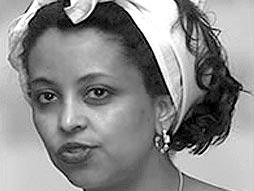
Eleni Gabre-Madhin is working to build Ethiopia's first commodities market. Re-establishing the profit motive for farmers, she believes, could help turn the world's largest recipient of food aid into a regional food basket.

Why you should listen to her:

Economist Eleni Gabre-Madhin has ambitious vision -- to found the first commodities market in Ethiopia, bringing rates and standards (not to mention trading systems, warehousing and data centers) to the trade of crops.

Gabre-Madhin left her earlier job, as a World Bank senior economist in Washington, DC, in part because she was disturbed by the 2002 famine in Ethiopia -- after a bumper crop of maize the year before. With prices depressed, many farmers simply left their grain in the field in 2001. But when the rains failed in 2002, a famine of 1984 proportions threatened the country. Her dream: to build a market that protects the African farmer, who is too often living at the mercy of forces beyond his or her control.

The director of the International Food Policy Research Institute, Madhin studies market reforms, market institutions, and structural transformation in Africa, and works to create "a world free of hunger and malnutrition."

Email to a friend »

Blog Posts on TED

  • Day Two in Quotes [TEDGlobal 2007] – June 6, 2007


    “Dignity is more important to the human spirit than wealth” — Acumen Fund CEO/Founder Jacqueline Novogratz "What we call governments are vampire states, which suck the economic vitality out of the people." — Economist George Ayittey "I want to make Africans rich. If you make Africans rich, they'll be less poor. That's my development strategy." — Private equity pioneer Idris Mohammed "What we're trying to do is create a family tree for everyone alive today." — Anthropologist and geneticist Spencer Wells, who's leading the Genographic Project, a landmark study tracing human origins to their roots in Africa "There is no region of the world and no period in history that farmers have had to bear the burden of risk that African farmers bear today. But I'm not here to lament or wring my hands. I'm here to tell you that change is in the air." — Economist Eleni Gabre-Madhin, who is founding the first commodities market for farmers in Ethiopia "World progress needs a good dose of spontaneous human intelligence to realize that the answers to many of the questions we ask ourselves are just around the corner." — Architect Issa Diabete, who draws inspiration from innovative, makeshift urban solutions found in Africa's sprawling squatter cities "I'm hopeful because nature is amazing resilient. Seemingly dead tree stumps -- if you stop hacking them for firewood, in 10 years you can have a 30 ft tree.” — Primatologist and conservationist Jane Goodall “I am a mathematician and I would like to stand on your roof.” — Mathematician Ron Eglash's standard greeting to African families, when he was researching the intriguing fractal patterns observed in many villages across the continent Technorati tags: tedglobal2007 More

  • Fair play for Kenya farmers' market – March 29, 2008

    Ode Magazine writes of the inspiring efforts of TEDGlobal Fellow and agriculture activist Thomas George to build fair-play marketplaces for poor farmers in Kenya. His organization, Vipani, is a resource for workers on small farms -- people without credit, connections or know-how -- to access networks of other farmers, buyers, suppliers and lenders. George's work -- which he plans to expand to Rwanda and Uganda -- will resonate with fans of Eleni Gabre-Madhin, who spoke on Ethiopian commodities markets at TEDGlobal Africa in 2007, and Iqbal Quadir, who talked about empowering communities by connecting farmers with mobile phones. "A thriving rural economy," says George, "will benefit not only farmers, but everyone in the community." -- Matthew Trost More

  • Building an economic market in Ethiopia: Eleni Gabre-Madhin on TED.com – October 25, 2007

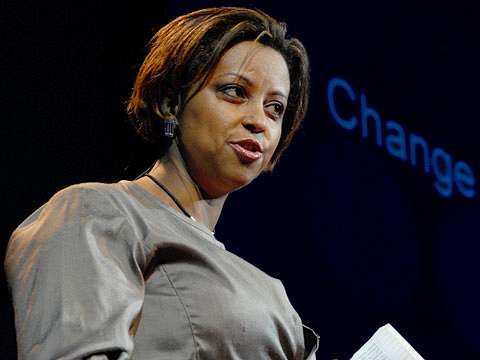
    Economist Eleni Gabre-Madhin outlines her ambitious vision to found the first commodities market in Ethiopia. Her plan would create wealth, minimize risk for farmers and turn the world's largest recipient of food aid into a regional food basket. "There is no place in the world and no time in history that small farmers have had to bear the burden of risk that African farmers bear today," she says. "But I'm not here to lament or wring my hands. I'm here to tell you that change is in the air." (Recorded June 2007 in Arusha, Tanzania. Duration: 20:46.)


    Watch Eleni Gabre-Madhin's talk on TED.com, where you can download it, rate it, comment on it and find other talks and performances.

    Read more about Eleni Gabre-Madhin on TED.com.

    New: Download this talk in high resolution >>

    Embed this video: Use this code to run the video on your own site:

    More

Eleni Gabre-Madhin on the Web

Bookmark this speaker

Related Speakers

Related themes

Conferences

  • TEDGlobal 2007