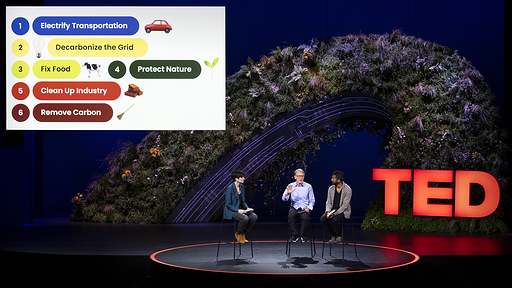
Speakers John Doerr: Venture capitalist

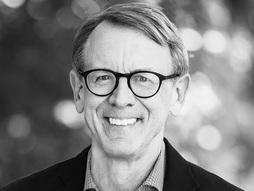
John Doerr, Silicon Valley's legendary moneyman, is afraid of eco-apocalypse. After building his reputation (and a considerable fortune) investing in high-tech successes, he's turning his focus toward green technologies, and hoping it isn't too late.

Why you should listen to him:

John Doerr, a partner in famed VC firm Kleiner Perkins Caufield & Byers, made upwards of $1 billion picking dot-com stars like Amazon, Google, Compaq and Netscape. (He also picked some flops, like Go Corporation and the scandal-ridden MyCFO.com.) He was famously quoted saying, "The Internet is the greatest legal creation of wealth in history," right before the dot-com crash.

But now he's back, warning that carbon-dioxide-sputtering, gas-powered capitalism will destroy us all, and that going green may be the "biggest economic opportunity of the 21st century." So Kleiner Perkins has invested $200 million in so-called greentech, a combination of startups that are pioneering alternative energy, waste remediation and other schemes to prevent the coming environmental calamity. But Doerr is afraid that it might be too little, too late.

"[John Doerr] is, by all accounts, the most influential venture capitalist of his generation."
Fast Company

Email to a friend »

Blog Posts on TED

  • Three powerful talks from TED2007 – May 30, 2007

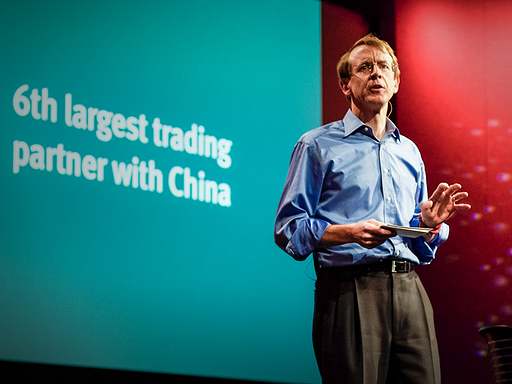
    This week we're posting three of the most-talked-about talks from TED2007 -- Ngozi Okonjo-Iweala, John Doerr and Blaise Aguera y Arcas' remarkable demo of Seadragon/Microsoft Photosynth.

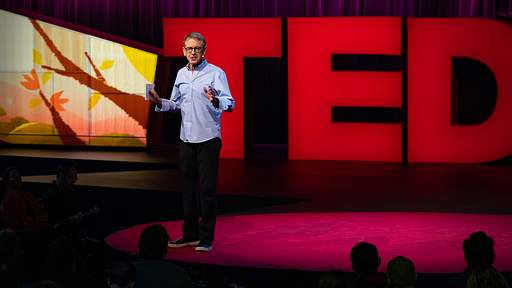
    Ngozi Okonjo-Iweala, the former Finance Minister for Nigeria (and the first woman to hold that job), argues for investment -- rather than aid -- as the means to help Africa. Okonjo-Iweala will also speak at next week's TEDGlobal conference in Arusha, Tanzania. John Doerr, legendary Silicon Valley venture capitalist, has turned his investment focus from high tech to greentech -- because his daughter asked him to. Blaise Aguera y Arcas, software architect for Microsoft and architect of Seadragon, put Microsoft's jaw-dropping Photosynth software through its paces in a demo that had TED2007 abuzz. (Recorded March 2007 in Monterey, CA.)


    Embed this video: Use this code to run the video on your own site:


    Embed this video: Use this code to run the video on your own site:


    Embed this video: Use this code to run the video on your own site:


    More

  • TED2007: Day two wrap-up – March 9, 2007

    Quotes of the day:

    Former US president Bill Clinton, TEDprize 2007 winner: "Help me in creating a better future for Rwanda by assisting my foundation, in partnership with the Rwandan government, to build a sustainable, high quality rural health system for the whole country, that can then be a model for other countries. We have a chance here to prove that a country that almost slaughtered itself out of existence (while none of us, most of all me, did anything to help) can practice reconciliation, reorganize itself, focus on tomorrow and provide comprehensive healthcare to its citizens."

    News photographer James Nachtwey, TEDprize 2007 winner: "I am a witness and I want my testimony to be honest and uncensored. I also want it to be powerful and eloquent and do justice to the people I'm photographing."

    Biologist E.O. Wilson, TEDprize 2007 winner: "I've come on a special mission on behalf of my constituency, the millions of trillions of insects and other small creatures, to make a plea for them. Please keep in mind that if we would wipe out insects from the planet - which we are trying hard to do - the rest of life would disappear within a few months."

    Author Michael Pollan: "Looking at the world from other species' point of view is a cure for human self-importance."

    Former Microsoft CTO Nathan Myhrvold: "I have this picture up on my computer screen, and a woman comes up and asks whether that's a Jackson Pollock painting, but no, it's a picture of penguin shit on rocks."

    VC John Doerr: "I'm scared. I don't think we're gonna make it." (About climate change)

    Former Nigerian Finance minister Ngozi Okonjo-Iweala: "There is an Africa that you don't hear often about, the Africa that's changing, the Africa of people that are taking their destiny into their hands."

    TED Media Director June Cohen: "The newest digital technologies are returning us to the most ancient form of media — one in which a natural order is restored; our individual stories take center stage, with the rest of the world as a backdrop."

    Creative Commons founder Larry Lessig: "We have to recognize they kids different from us. We watch TV, they make TV. It is technology that has made them different."

    More

  • Wired's Anderson on Lomborg's "Cool It" – August 12, 2007

    Wired editor Chris Anderson got an advance copy of Bjorn Lomborg's upcoming book Cool It: The Skeptical Environmentalist's Guide to Global Warming, and his summary is: read it, but don't follow his advice. Lomborg (watch his TED2005 speech) argues that although global warming is clearly happening and is human-caused, the debate over what to do about it has been polluted by way too much bad science, non-science, inflamed rhetoric and outright fibs. In the book, the Danish political scientist offers numerous examples of how much of the rhetoric over the effects of climate change doesn't stand up to scrutiny (for example: the most likely effect of climate change would be to increase, not decrease, the amount of ice in Antarctica). "It's time to put the debate over whether human-driven climate change is happening behind us and instead focus on technologies to decarbonize the economy," writes Anderson. But climate change is only one of three strong reasons to do this, he adds: the others are economics (rising direct and indirect costs of oil and carbon fuels) and geopolitics (oil revenues prop up bad governments around the world). There is a fourth reason that Anderson forgets, and which has been convincingly put forth by Al Gore in his TED2006 speech: it's a moral imperative. More

  • New thinking on climate change: Al Gore's new slideshow premieres on TED.com – April 8, 2008

    In Al Gore's brand-new slideshow (premiering exclusively on TED.com), he presents evidence that the pace of climate change may be even worse than scientists were recently predicting, and challenges us to act with a sense of "generational mission" -- the kind of feeling that brought forth the civil rights movement -- to set it right. Gore's stirring presentation is followed by a Q&A in which he is asked for his verdict on the current political candidates' climate policies and on what role he himself might play in future. (Recorded March 2008 in Monterey, California. Duration: 27:54.)


    Watch Al Gore's talk on TED.com, where you can download it, rate it, comment on it and find other talks and performances.

    Read more about Al Gore on TED.com.

    Download this talk in 480p high-def >>

    Subscribe2TEDTalks.jpg

    Embed this video: Use this code to run the video on your own site:

    More

  • Inspired by Al Gore: TEDTalks – October 12, 2007

    The TEDTalks archive is rich in proof that Nobel Peace Prize winner Al Gore, speaking at TED and elsewhere, truly has the power to inspire action. Producer and activist Jeff Skoll heard one of Gore's PowerPoint lectures and started the ball rolling on An Inconvenient Truth -- a film and website that became an incredibly effective way to share the message on climate change. John Doerr, the Silicon Valley financier, talks about a mind-changing conversation (like many of us had after An Inconvenient Truth) -- sitting with friends at a dinner party asking, "What can we do about what Al Gore has told us?" Doerr, it turns out, is doing quite a lot. Speaker Tony Robbins was moved by the way Gore -- after the legendary disappointment of that 2000 presidential race -- rebounded and found his passion. Look for the moment when Gore and Robbins share a high-five down in the front row. Majora Carter, meanwhile, offers new ways for Gore to share his passion -- by working with the thousands of people who are cleaning up the environment, starting in their own neighborhoods. And after hearing Al Gore's first talk at TED, Jill Sobule sat backstage and learned a new song. More

  • TED Salon: Further reading – September 29, 2007

    KeithNYTimes.JPGSome selected source material and references from Wednesday night's TED Salon: David Keith (pictured, left) showed a New York Times editorial on the coming climate change -- from May 24, 1953:

    How Industry May Change Climate
    The amount of carbon dioxide in the air will double by the year 2080 and raise the temperature an average of at least 4 per cent. The burning of about two billion tons of coal and oil a year keeps the average ground temperature somewhat higher than it would otherwise be. ...

    Within the NYTimes archive, we found a related story from 1953:

    The Weather Is Really Changing
    Studies confirm that feeling you've had that summers are getting warmer. So are our winters. But atmosphere, not atoms, is to blame.

    RestoQualGoogleBooks.jpg

    A few other historical sources Keith referred to:
    + Changing Climate, by the Carbon Dioxide Assessment Committee, U.S. National Research Council, 1983
    + Restoring the Quality of Our Environment, Report of the Environmental Pollution Panel, President’s Science Advisory Committee, The White House, December 1965 Martin Hoffert discussed the Kardashev scale -- a ranking of civilizations based on the kinds of energy they use. Earth is still at the bottom of this scale -- we're just using whatever we find lying around on the planet. More advanced civilizations in the universe, Kardashev theorizes, will begin to harvest and grow power using all the resources of their star system and of the universe. Hoffert shows us one step toward star power: solar energy via satellite. Juan Enriquez talked about two scientists whose work could point the way to a new future of energy. As an inspiration, he points to Norman Borlaug, called "the Father of the Green Revolution." Borlaug developed optimized strains of wheat that, quite literally, now feed the world. He brought a biological, a scientific approach to agriculture that allowed it to leap beyond the boundaries of traditional "brute force" farming -- to become efficient, dependable and more productive by orders of magnitude. Enriquez' next scientist-hero is Hamilton Smith, who shared the 1978 Nobel Prize in Medicine for his work in manipulating DNA. Is Smith, or someone like him, the person who will help energy make the great leap forward that farming has? Photo of David Keith by Myrna Suarez, Condé Nast Portfolio More

  • TED2007 Day Three: things that knocked my hat in the creek – March 10, 2007

    Wow!  Day Three at TED2007 ROCKED!  A magical day which got crank-started by a truly electric presentation on the perils of Local Warming. 

    This was a day which just can't wait for the TEDTalks to come out.  Daniel Goleman made a wonderful connection between emotional intelligence and the empathy which will be required -- by all of us -- to make more informed, broader-scope consumption and action decisions in the future.  Later in the day Eames Demetrios, grandson of Charles Eames (and a true design thinker in his own right) made the same point in a different way -- humanity has got the information now; we just need to start making better choices.

    Today (actually, yesterday, since once again I find myself blogging at 4 in the morning -- funny that...) was one of those classic TED days where almost everything was mind-blowing,where just about everything knocked my hat in the creek.  Highlights for me were JJ Abrams and his Mystery Box; Jeff Skoll and his enlightened humanity; Deborah Scranton and her movie The War Tapes, which every global citizen must see and experience; Will Wright and his latest "game" which I couldn't help but think was the fortuitous answer to the TEDPrize wish of 2007 TEDPrize winner E.O. Wilson; Jaime Lerner as a vibrant example of the power of pure enthusiasm; Eames Demetrios for giving us the gift of previously unseen movies which exposed the vernacular power of iterative prototyping, as well as a parable of a banana leaf which pretty much sums up TED 2006+2007 in a nutshell (you MUST watch this TEDTalk when it comes out!); and of course Tracy Chapman and Isabel Allende for their artistry and authenticity.

    It was a good day.

    Above, all, I want to express my personal gratitude for Thomas Dolby and the musicians of the Jazz Mafia for the musical punch they give to all of TED:

    Cimg6608_2

    More

  • TED2007: Sketchblogging the conference – March 9, 2007

    Lorna Herf is an illustrator and designer from Los Angeles attending TED and she's been blogging on lornamatic in a pretty original and compelling way - she's sketchblogging the conference. Check out her blog. Here are her "notes" from four speakers: Carolyn Porco (session 1), John Doerr (session 3), Ngozi Okonjo-Iweala (session 3) and Michael Pollan (session 5):

    Ted07lornaherfcarolynporco

    Ted07lornaherfjohndoerr

    Ted07lornaherfokonjoiweala

    Ted07lornaherfmichaelpollan

    More

  • Gore's call for a carbon/jobs Marshall plan – October 1, 2007

    Al Gore (TED2006 speech) at last week's Clinton Global Initiative: "The key to fighting global poverty is to have the wealthy nations and the developing nations join together to reduce global warming ... What we need is a global Marshall plan to make the creation of jobs around the reduction of carbon the central principle for how we develop this." (From the FT) More

  • Bill McDonough, Reel to Reel – August 24, 2007

    The information spread a few months ago: director Steven Spielberg is planning a movie (a theatrical documentary) about pioneering green architect William (Bill) McDonough, BMcDonough his work, and his "Cradle to Cradle" vision of absolute sustainability -- which Bill detailed in a 2002 book (written with Michael Braungart) and explained at TED2005 (watch his speech) and is now trying to apply everywhere, from the Googleplex to new Chinese cities. But while Spielberg is thinking, actor Leo Di Caprio sped past, presumably in his Prius: inspired (like Spielberg) by Al Gore's "An Inconvenient Truth", Di Caprio has produced "The 11th Hour", an eco-doc about humans creating the conditions for their own demise by destroying nature. The movie debuted at the last Cannes Film Festival; premiered in New York and Los Angeles a few days ago (read the NY Times review); and it's released across the US and Canada today (Europe and the rest of the world will have to wait). Among the academics, designers, entrepreneurs and other experts that appear in the film, narrated by Di Caprio, is Bill McDonough. More

  • Geo-engineering to slow global warming: David Keith on TED.com – November 13, 2007

    Environmental scientist David Keith talks about a cheap, effective, shocking solution to climate change: What if we injected a huge cloud of particles into the atmosphere, to deflect sunlight and heat? As an emergency measure to slow a melting ice cap, it could work. Keith discusses why geo-engineering like this is a good idea, why it's a terrible one -- and who, despite the cost, might be tempted to use it. (Recorded September 2007 in New York City. Duration: 16:04.)


    Watch David Keith's talk on TED.com, where you can download it, rate it, comment on it and find other talks and performances.

    Read more about David Keith on TED.com.

    Embed this video: Use this code to run the video on your own site:

    More

  • Quotes from the TED Salon – September 27, 2007

    EnriquezGlobe.JPGLast night in Manhattan, TED hosted its 2007 Salon, called "Hot Science: Radical Ideas to Combat the Climate Crisis." A detailed roundup is coming later today -- but first, a few quotes from last night: The first speaker, Michael Oppenheimer, began by saying: "I'm the depressing, immobilizing part of the talk." He went on to make this point: While Hurricane Katrina can't be directly tied to climate change, it did teach us one thing:

    You can't count on the government to save you from global warming. They're still inept to this day, and half an American city is gone, and how the hell are we going to deal with this? And what are we doing instead?

    He puts up a devastating slide of the hyperdevelopment on the beach at Atlantic City -- which would lose 100 feet of beachfront if global sea levels rise 1 foot, as they will.

    Alternative energy expert Martin Hoffert is a staunch advocate for getting off fossil fuels altogether. He spun out one scenario:

    Let me say a few words about space solar power. The advantage of putting solar collectors in orbit: The sun is basically shining 24/7. We already have thousands of satellites up there -- suppose you could build a transmitting antenna in orbit that would beam energy down to collectors, beaming energy using lasers (not microwaves) from geostationary orbit? We could send it up in one launch vehicle, and power a village, maybe in Africa, to demonstrate the viability of solar power. We could do this in 3 to 5 years.


    Environmental scientist David Keith talked about geoengineering -- dramatic, cheap solutions to a warming atmosphere, such as blowing a Mt. Pinatubo-size cloud of sulfur into the sky to bring the global temperature down. Such ideas seem overly dramatic, and even immoral, but they are out there, and he argues:

    We should move this out of the shadows and talk about this seriously, because sooner or later we will be confronted with a decision on this. We would do [geoengineering] instead of cutting emissions, instead of mitigation, because it's cheaper. It's very cheap. It's not a GOOD idea, but that's how big the [incentive] is. That is not in dispute, though we might argue over the sanity of it ...


    Russ George, the chief scientist of Planktos, offered a way to think about all the factors contributing to the larger issue of climate change:

    We have a bunch of aberrant applications in this planet, jamming a lot of errors against that primary operating system, and it's threatening to reboot and give us that blue screen of death, threatening a reboot back to 16 million years ago.


    Juan Enriquez (pictured above) talked about how much of our energy, such as coal and oil -- made from ancient plants -- is simply "concentrated sunlight." How can we get to the point where we grow our own energy as efficiently as we grow wheat? Looking at a photo of a pile of surplus grain, Enriquez notes:

    That would probably be a good outcome for energy.

    Photo of Juan Enriquez by Myrna Suarez, Condé Nast Portfolio More

  • Notes from the TED Salon: "Hot Science: Radical Ideas to Combat the Climate Crisis" – September 27, 2007

    Oppen.JPGLast night in New York City, 250 TEDsters gathered to hear some radical proposals for outsmarting climate change. It's a fact: Atmospheric carbon dioxide levels are rising, and with them the possibility of severe climate change within our lifetimes. Increasingly, scientists are considering extreme measures that can quickly suck CO2 out of the atmosphere to reverse the heat buildup that could cause global warming. And so, with our sponsors, BMW and Conde Nast Portfolio magazine, TED hosted a salon on climate change. The goal: Inspire a debate that goes beyond conventional rhetoric, and explore some radical scientific solutions that just might be ideas worth spreading ... Guest host Stephen Petranek began the night with a spirit of discovery. Seen from one angle, "global warming is a very simple chemistry problem," he said, and removing CO2 from the air shouldn't actually be that hard. In exploring the problem of climate change, his search for solutions (and speakers) turned up a wide range of unconventional thinkers and remarkable ideas -- all of which are within the realm of near-term possibility. First up: Michael Oppenheimer (pictured above), former chief scientist at the Environmental Defense Fund, who was one of first to sound the warning about global warming. "I'm the depressing and immobilizing part of the program," he joked. "I don't propose any solutions .... So pop your Prozac and let's go." Oppenheimer set up the evening by demonstrating the overwhelming evidence that "pervasive climate change is already under way" and "further warming is physically inevitable." (For a refresher on the causes of climate change, and the role of carbon dioxide, there's no better primer than Al Gore's An Inconvenient Truth). Physicist Martin Hoffert took the stage next. A staunch advocate for getting off fossil fuels, Hoffert takes what might fairly be called an expansive approach to alternative energy, urging the systematic use of all our planet's available energy sources: not only the wind and the sun, but ultimately all the star-power in our galaxy. Viewed from this angle, our singular focus on earth-bound fossil fuels seems not just misguided, but small-minded: "We're relying on sources that represent only an infinitesimal portion of available energy," Hoffert said. His proposals -- which range from wind farms (like the one atop the original Freedom Tower design) to a global power grid for collecting and distributing solar power, to an idea ("usually considered pretty far out ... but maybe not for this audience") for collecting solar power from space -- all push the limits on conventional thinking and urged us, essentially, to think bigger. Now, just as the evening's speakers are all testing the edge of science, performer Sxip Shirey is pushing the edge of music. A circus composer and all-round showman, Shirey uses bowls and marbles, music boxes, bells and whistles to create beautiful, otherworldly sounds unlike anything you've heard. His short piece, "Pandora" -- beautiful, haunting, eerie, sexy, mind-bending in its own right -- provided a bit of mental cross-training, mid-evening. Murmurs of "How does he do that?" could be heard through the crowd ... Next, environmental scientist David Keith put forth another controversial solution: What if we injected levitated particles (likely sulfurous) into the middle atmosphere, to deflect sunlight and heat? The method is "absurdly cheap," mimics a natural process that occurs when volcanoes erupt, and could be deployed in a localized fashion above the poles, as an emergency measure to slow a melting ice cap. Now, this might may not be a GOOD idea, Keith warns. But it's crucial that it enters the realm of public discourse. The idea has been around since the Johnson administration, but public debate has been squelched for a number of reasons, including this central problem: The knowledge that geo-engineering is possible makes climate change less fearsome, and reduces the political will to cut emissions (which we must do). "This is what economists cause a moral hazard," Keith concludes. But it's no reason to avoid a discussion: "We don't make good policy decisions by hiding things in a drawer." The next speaker, Russ George, brought our focus down from the stratosphere and into the oceans, where climate change and rising CO2 levels have caused a dramatic loss of ocean productivity, particularly in the southern hemisphere. George focused on the disappearance of plankton blooms along the water's surface (think of them as ocean forests). His proposal: the controlled release of iron filings in the Pacific to stimulate a plankton bloom, and therefore increase uptake of atmospheric carbon dioxide. George's firm, Planktos, would then sell carbon offsets, based on the productivity of the "iron bloom." Like Keith's solution (injecting particles into the atmosphere), this approach mimics a natural process caused when dust storms swirl out over the sea. And it similarly (let's face it) triggers serious concern about unintended consequences. The evening's final speaker, TED veteran Juan Enriquez, offered us a glimpse at some ground-breaking research to explore the potential of bioenergy. He looked at the way our current energy sources -- coal, oil, gas -- are ultimately derived from ancient plants, and are in some way "concentrated sunlight." Can we learn from that process and accelerate it? Can we apply biological principles to the problem of fuel creation? Can we get to the point where we grow our own energy as efficiently as we grow wheat? Looking at a photo of a pile of surplus grain, he notes, "That would probably be a good outcome for energy." After five provocative speakers, and many more mind-bending proposals, Stephen Petranek neatly summed up the thoughts swirling through all of our minds: "Humans are at a place in their history when we can actually engineer our own planet and fool mother nature," he reflected. And while we must be absolutely mindful of the unintended consequences (they inevitably occur), "It's incredibly uplifting to know we can control our own destiny." The talks from this Salon will be made available on TED.com over the months to come. Photo of Michael Oppenheimer by Myrna Suarez, Condé Nast Portfolio More

  • Gore's SOS -- Save Our Selves – February 16, 2007

    Along the social absorption route, there is always a point where complex issues and inconvenient messages percolate into the pop-culture sphere and start being considered self-evident, possibly triggering changes in behavior and other individual or collective responses.

    For the climate crisis that point may be nearing. It may even have a precise date: this year's 7th of July (7/7/7). A group of environmental activists surrounding former US vice-president Al Gore (see his speech at TED2006) has just announced plans for a worldwide event, called LiveEarth, featuring big live concerts in cities on seven continents (another "7") broadcast on television, radio, online (by sponsor MSN) and on cell phones (yes, one of the concerts will be broadcast from Antarctica, that will be a first) to mobilize global action to face the climate crisis. 777liveearth The initiative will use as its identifier the international SOS Morse code (three dots, three dashes, three dots - see logo at right), re-interpreting it as a continuous distress call where SOS stands for "Save Our Selves". "The climate crisis will only be stopped by an unprecedented and sustained global movement", Gore said announcing the initiative (watch the video), which he called "a mass persuasion campaign" that will also outline (through the websites) ways in which individuals, companies and politicians can take action.

    LiveEarth is of course modeled on the 1985 LiveAid (to raise funds for famine relief) and the 2005 Live8 (to raise pressure for debt relief and eliminating poverty) international concerts. It was imagined by Kevin Wall, who produced Live8. More than 100 artists will appear - including Sheryl Crow, Bon Jovi, Red Hot Chili Peppers, local acts (to attract local audiences), etc.

    For Gore, LiveEarth will be a spectacular way to extend the message of his film "An Inconvenient Truth" (which is nominated for an Oscar later this month) and of his Climate Project (training volunteers to give his slide show). But of course it won't go without controversies -- starting with the question of whether he's just building up a run for US President in 2008 (which he dismisses: "I have no intentions of running"). The other focus of criticism will be the environmental impact of the multicontinental concert (air travel, mass audiences producing mass waste, energy consumption, etc). Wall and Gore say they're using LiveEarth to design a "Green event standard" that could become a "model for carbon-neutral concerts and other live entertainment events".

    (Cross-posted on LunchOverIP)

    More

  • 10 ways the world could end: Stephen Petranek on TED.com – September 25, 2007

    Stephen Petranek reveals the question that occupies scientists at the end of the day (and the beginning of happy hour): How might the world end? He lays out the challenges that face us in the drive to preserve the human race. Will we be wiped out by an asteroid? Eco-collapse? How about a particle accelerator gone wild? (Recorded February 2002 in Monterey, California. Duration: 29:10.)


    Watch Stephen Petranek's talk on TED.com, where you can download it, rate it, comment on it and find other talks and performances.

    Read more about Stephen Petranek on TED.com.

    NEW: Read the transcript >>

    Embed this video: Use this code to run the video on your own site:

    More