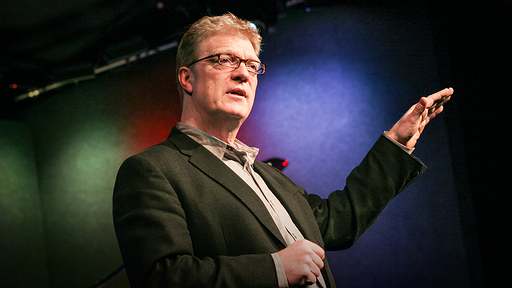
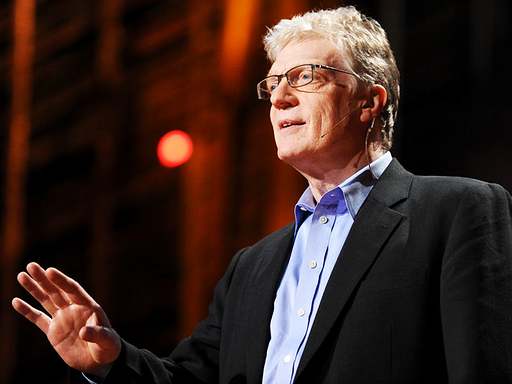
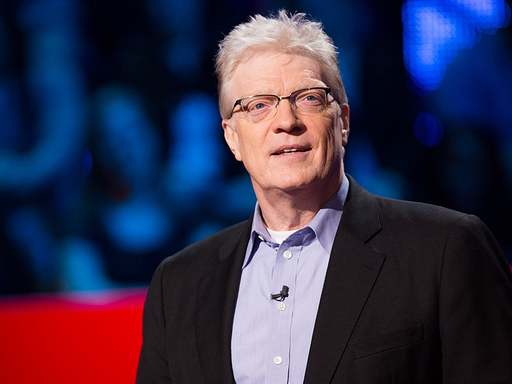
Creativity expert Sir Ken Robinson challenges the way we're educating our children. He champions a radical rethink of our school systems, to cultivate creativity and acknowledge multiple types of intelligence.
Why you should listen to him:
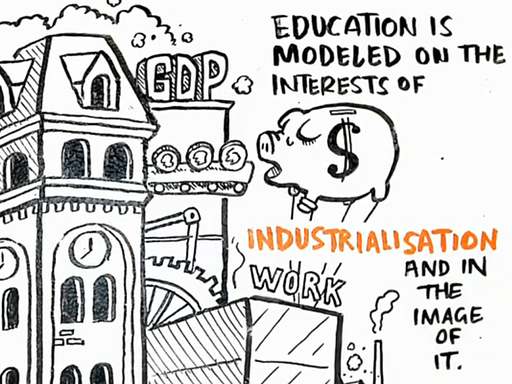
Why don't we get the best out of people? Sir Ken Robinson argues that it's because we've been educated to become good workers, rather than creative thinkers. Students with restless minds and bodies -- far from being cultivated for their energy and curiosity -- are ignored or even stigmatized, with terrible consequences. "We are educating people out of their creativity," Robinson says. It's a message with deep resonance. Robinson's TEDTalk has been distributed widely around the Web since its release in June 2006. The most popular words framing blog posts on his talk? "Everyone should watch this."
A visionary cultural leader, Sir Ken led the British government's 1998 advisory committee on creative and cultural education, a massive inquiry into the significance of creativity in the educational system and the economy, and was knighted in 2003 for his achievements.
"Ken's vision and expertise is sought by public and commercial organizations throughout the world."BBC Radio 4
Blog Posts on TED
-
What to do until the TED DVD arrives... – March 2, 2006
I don't know about you, but my mind is simply abuzz with the sights, sounds, emotions, and ideas I encountered at TED 2006. I can't wait for the TED DVD to arrive so that I can go back and listen to the words of Sir Ken Robinson, hear the music of Thomas Dolby, and soak in the... ahem, insights, of Charles Fleischer.
Until then, Google will have to do.
For example, Joshua Prince-Ramus did a marvellous job of showing us a design process which capitalized on very real contraints in order to create the stunning Seattle Public Library. When was the last time you heard an architect say that focusing on capital and operational budgets provided a springboard to innovation? Until I see his talk again on the TED DVD, this BusinessWeek interview with Prince-Ramus which I Googled is just enough to keep my brain from going hungry.
-
What's the best thing about being Sir Ken Robinson? – June 20, 2008
This week, Sir Ken Robinson was awarded the Benjamin Franklin Medal by the UK's RSA (the Royal Society for the encouragement of Arts, Manufactures and Commerce). At the ceremony, he gave a lecture on education and creativity -- followed by a lively Q&A where he made several new and bold suggestions. You can download audio of the lecture and Q&A; the RSA plans to post video as well. (After listening to Sir Ken's Q&A, blogger Tim Stahmer from Assorted Stuff makes the call: Sir Ken for Secretary of Education.) And thanks to Ewan McIntosh's edu.blogs.com for this: Student reporters from the Radiowaves project caught up with Sir Ken Robinson at the London International Music Show last week and shot this video interview with him, followed by commentary by the young interviewers on what education and music mean to them >>
-
Sir Ken Robinson on TEDTalks – June 27, 2006
Sir Ken Robinson is author of Out of Our Minds: Learning to be Creative, and a leading expert on innovation and human resources. In this talk, he makes an entertaining (and profoundly moving) case for creating an education system that nurtures creativity, rather than undermining it. (Recorded February, 2006 in Monterey, CA. Duration: 20:02)Download this video: Audio (MP3) | Video (MP4) | GoogleVideo
More TEDTalks: TEDTalks website | iTunes (audio) | iTunes (video)
Blog this video: Use this code to run this video on your own site.
-
Counting down the Top 10 TEDTalks – June 26, 2008
With 50 million views since we debuted online two years ago, TED talks have become a powerful cultural force.
To celebrate this milestone, we're releasing a never-before-seen list: the Top 10 TED talks of all time, as of June 2008.
With speakers like neuroanatomist Jill Bolte Taylor and global health expert Hans Rosling, the list proves one of the compelling ideas behind TEDTalks: that an unknown speaker with a powerful idea can reach -- and move -- a global audience. Links to all 10 talks are found below -- or browse through our Top 10 TED Talks Theme. Even if you've seen all the talks, the highlights video is darn fun.
Embed this video: Use this code to run the video on your own site:
Download the Top 10 TED Talks highlights video:
Video to iTunes (MP4)
Video to desktop (Zipped MP4)
Hi-def video (480p)Top 10 TED Talks of all time
1. Jill Bolte Taylor: My stroke of insight
2. Jeff Han: Touchscreen demo foreshadows the iPhone
3. David Gallo: Underwater astonishments
4. Blaise Aguera y Arcas: Jaw-dropping Photosynth demo
5. Arthur Benjamin: Lightning calculation and other "Mathemagic"
6. Sir Ken Robinson: Do schools kill creativity?
7. Hans Rosling: The best stats you've ever seen
8. Tony Robbins: Why we do what we do, and how we can do it better
9. Al Gore: 15 ways to avert a climate crisis
10. Johnny Lee: Creating tech marvels out of a $40 Wii Remote -
Sharing TED Moments ... – March 1, 2006
Every year, we leave Monterey buzzing about our "TED moments": those magical instances of creativity and connectivity that can happen only at TED. Some are collective experiences: a moment of profound inspiration on stage ripples through the audience, and you can almost see the lightbulbs illuminating over 500 heads. Others are deeply personal ... the kind of "A-ha!" moments that happen when you suddenly connect your own ideas with something far deeper or meet a person who transforms your thinking.
Many bloggers have already shared their TED moments: Bill Liao found his world view changed by Al Gore's wake-up call on climate change. Something clicked for John Maeda during Ken Robinson's talk on education. The normally unflappable Ethan Zuckerman found himself tongue-tied in the presence of Dan Dennett. Bruno Giussani mused over the unceremonious removal of Al Gore's namebadge. And Andrew Anker laughed at himself, with Tipper Gore's help.
For me, three TED Moments in particular stand out: all moments when our collective energy surged ...
- The groan of disappointment when Julia Sweeney reached the 18-minute mark in her brilliant one-woman show, "Letting Go of God," and declared, "I'm sorry. I have to stop."
- The sharp intake of breath (in a session bearing that name), as Jeff Han breezily manipulated images on his next generation computer interface, shown publicly for the first time at TED.
- The spontaneous applause following Hans Rosling's play-by-play explanation of globalization. His fast-paced narration began in 1963, when a distinct gulf separated developed and undeveloped nations. In the former, people enjoyed long lives and chose to have small families; in the latter, life expectancy was short and birth rates high. As the time-lapse graph ticked toward 2005, and nations realigned themselves, Rosling observed: "And now, we all have long lives and small families, and we have [pause] a completely new world."
-
Day four: The day in quotes – February 25, 2006
"We are seeding the area with 'green-collar' jobs, people who have both an economic interest and a personal stake in their environment"— Majora Carter on her organization's efforts to 'green' the South Bronx
“If you're not prepared to be wrong, you will never come up with anything original” – Ken Robinson
"Creativity is now as important in education as literacy, and we should treat it with the same status". — Ken Robinson
"He was in someone's English class wasn't he? ... How annoying would that be?" —Ken Robinson imagining the challenge of educating William Shakespeare
"You see that the artist had no idea how to use colors, or maybe he was in a hurry" —Ursus Wehrli on “tidying up” Paul Klee’s 1930 colored chalkboard “Farbtafel”
"Live a "carbon neutral" life, it's easier than you think: reduce, and then offset the rest" – Al Gore
"On behalf of the elephants, thank you for listening" — Photographer Gregory Colbert
-
Why we should teach philosophy to kids – December 13, 2007
Via the BPS Research Digest: A recent study on the long-term benefits of the Socratic method. In a study of 105 children, all around 10 years old, teachers spent an hour a week for 16 months teaching lessons based on philosophical inquiry.

The philosophy-based lessons encouraged a community approach to "inquiry" in the classroom, with children sharing their views on Socratic questions posed by the teacher.
The result? At the end of 16 months,
Compared with 72 control children, the philosophy children showed significant improvements on tests of their verbal, numerical and spatial abilities
And two years later, when the philosophy children were tested again, their higher scores persisted -- while the lower-scoring control group were, in some cases, declining further. Researchers Keith Topping and Steve Trickey point out that these gains persisted even though the kids had switched schools as well, from primary to secondary, showing that the influence of philosophical inquiry works across contexts and over time. Or in the words of Socrates, "If this is the doctrine which corrupts the youth, my influence is ruinous indeed."
Socrates image from Wikimedia
-
TEDTalks turn 2! – June 27, 2008
Two years ago today, TED.com posted its first six TEDTalks. It was a radical notion to share these powerful talks and ideas with the world -- but it looks like it was the right notion. This week, TEDTalks notched its 50 millionth view, and we moved to a daily publishing schedule to keep up with the demand for more great talks, performances and conversations.
Celebrate with us by suggesting your favorite TEDTalks over the past two years. Count down the Top 10 TEDTalks in a special Theme page, where you can discuss the talks and suggest your own hidden gems from the archive.
Watch the first six TEDTalks, posted two years ago today:
Al Gore on 15 ways to avert a climate crisis
David Pogue says "Simplicity sells"
Majora Carter's tale of greening the ghetto
Ken Robinson asks, Do schools kill creativity?
Tony Robbins talks about why we do what we do
Hans Rosling shows the best stats you've ever seen
-
Embrace the zen of presentation – February 16, 2008
More presentation news: Garr Reynolds pulls examples from his favorite TEDTalks (Majora Carter, Hans Rosling, Sir Ken Robinson) for his new book, Presentation Zen-- to help his readers refine, simplify and focus their own presentations and talks.
What makes a great TED speaker? Passion, connection, a story to tell. As Reynolds points out, "If your idea is worth spreading, presentation matters."
-
Introducing TEDTalks – June 27, 2006
Today, for the first time ever, we're thrilled to present some of the most remarkable talks from TEDs past. We launch with six from this year's conference — Al Gore, Tony Robbins, David Pogue, Majora Carter, Hans Rosling and Ken Robinson — with more coming weekly. All the talks are downloadable as audio or video, searchable and free.
It's a big moment for us: Until now, the TED experience has been limited to 1,000 people each year. But we believe passionately that these talks deserve a much wider audience. Now — thanks to the maturation of online video and podcasting, and a visionary sponsorship from BMW — we can share them for the first time.
TEDTalks are designed to fit into your life: You can subscribe, to easily receive updates each week. There's an audio series (produced with WNYC/New York Public Radio) that commutes well, as well as the video series, offered on this blog and TED.com, and downloadable through iTunes. Plus, the talks are fully searchable, so you can always find exactly what you're looking for.
Our intention here isn't to draw attendees (TED2007 already has a long waiting list), but simply to share these profound talks — which have had such great impact on us — with the widest possible audience. They're ideas worth spreading. So whether you're a TED veteran or virgin, we encourage you to clear your schedule and watch at least three talks, back to back. They have a cumulative effect ... — Chris