
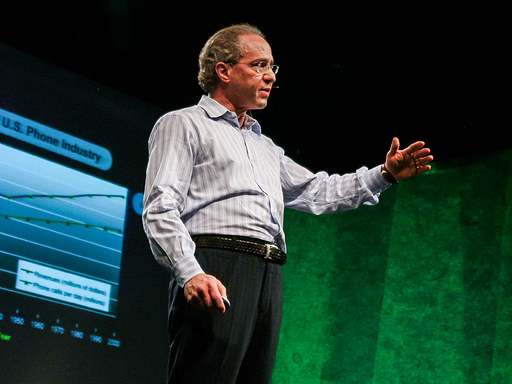
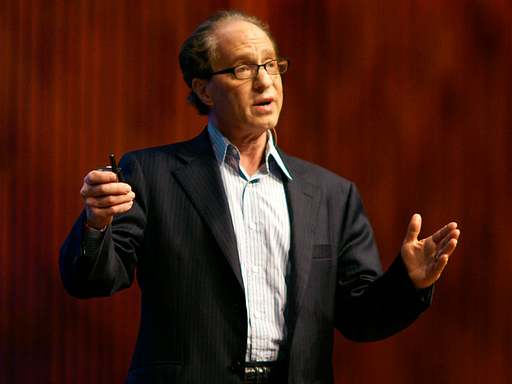
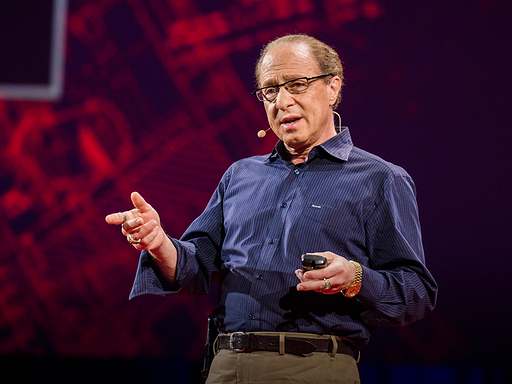
Ray Kurzweil is an engineer who has radically advanced the fields of speech, text, and audio technology. He's also one of our finest thinkers, revered for his dizzying -- yet convincing -- writing on the advance of technology, the limits of biology, and the future of the human species.
Why you should listen to him:
Inventor, entrepreneur, visionary, Ray Kurzweil's accomplishments read as a startling series of firsts -- a litany of technological breakthroughs we've come to take for granted. Kurzweil invented the first optical character recognition (OCR) software for transforming the written word into data, the first print-to-speech software for the blind, the first text-to-speech synthesizer, and many electronic instruments.
Yet his impact as a futurist and philosopher is no less significant. In his best-selling books, which include The Age of Spiritual Machines and The Singularity Is Near: When Humans Transcend Biology (which is set to become a movie in 2008), Kurzweil depicts in detail a portrait of the human condition over the next few decades, as accelerating technologies forever blur the line between human and machine.
"Kurzweil's eclectic career and propensity for combining science with practical -- often humanitarian -- applications have inspired comparisons with Thomas Edison."Time
Blog Posts on TED
-
On Communicating – October 27, 2005
A special report from Forbes.com covers the broad topic of Communicating in some interesting ways: from the origins of language in chimps to alien contact to the latest computer interfaces (including the SUI, or Straw-like User Interface, which lets you experience the sensations of drinking). Many TED voices here (Steven Pinker, Jane Goodall, Ray Kurzweil, James Surowiecki), and a few gems -- if you're willing to dig for them -- including an entertaining bit on 10 Things you Communicate Unintentionally.
-
Bird Flu Genome: Recipe for disaster? – October 17, 2005
Some of the world's greatest minds are consumed these days with the threat of avian flu. In an effort to better understand the evolution of the virus, scientists recently decoded -- and published -- the genome of the 1918 flu virus (which also jumped from birds to humans). A grave mistake, according to two eminent TEDsters. In today's New York Times, inventor Ray Kurzweil (TED2005) and Sun Microsystems founder Bill Joy (who will speak at TED2006), argue that publishing this genome is a matter of national -- or, rather, global -- security. It would be easier, they argue, to create and release this virus than it would be to build and detonate an atomic bomb. Chilling ... and well-argued.
-
14 ways to fix the future – February 16, 2008
The National Academies' "Grand Challenges for Engineering" list, released yesterday, runs down the 14 most pressing issues we must face in the 21st century. Creating access to clean water ... restoring our cities ... engineering new medicines and new ways of providing care ... the list is vast and inspiring. Look on the Next Steps area to find out where we can go from here.
The committee that selected these 14 Grand Challenges includes TEDTalks speakers Jaime Lerner, Dean Kamen, Craig Venter, Larry Page and Ray Kurzweil.
Listen to Ray Kurzweil at the press conference, discussing the future of solar power >>

