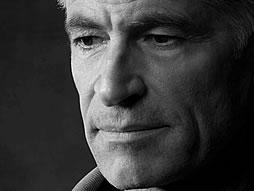
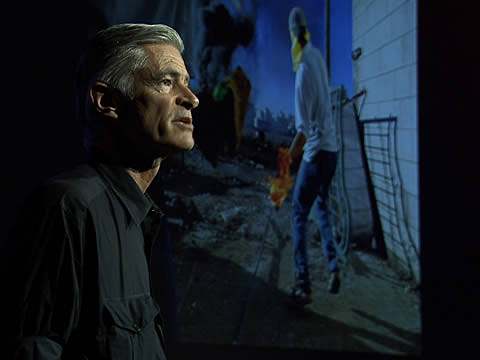
Photojournalist James Nachtwey is considered by many to be the greatest war photographer of recent decades. He has covered conflicts and major social issues in more than 30 countries.
Why you should listen to him:
For the past three decades, James Nachtwey has devoted himself to documenting wars, conflicts and critical social issues, working in El Salvador, Nicaragua, Guatemala, Lebanon, the West Bank and Gaza, Israel, Indonesia, Thailand, India, Sri Lanka, Afghanistan, the Philippines, South Korea, Somalia, Sudan, Rwanda, South Africa, Russia, Bosnia, Chechnya, Kosovo, Romania, Brazil and the United States.
Nachtwey has been a contract photographer with Time since 1984. However, when certain stories he wanted to cover -- such as Romanian orphanages and famine in Somalia -- garnered no interest from magazines, he self-financed trips there. He is known for getting up close to his subjects, or as he says, "in the same intimate space that the subjects inhabit," and he passes that sense of closeness on to the viewer.
In putting himself in the middle of conflict, his intention is to record the truth, to document the struggles of humanity, and with this, to wake people up and stir them to action.
"Reticent about discussing his own life beyond the basic facts, he's clearly one of those rare characters who focus singularly on their work with a missionary-like sense of purpose."Salon.com
Blog Posts on TED
-
TED2007: Day two wrap-up – March 9, 2007
Quotes of the day:
Former US president Bill Clinton, TEDprize 2007 winner: "Help me in creating a better future for Rwanda by assisting my foundation, in partnership with the Rwandan government, to build a sustainable, high quality rural health system for the whole country, that can then be a model for other countries. We have a chance here to prove that a country that almost slaughtered itself out of existence (while none of us, most of all me, did anything to help) can practice reconciliation, reorganize itself, focus on tomorrow and provide comprehensive healthcare to its citizens."
News photographer James Nachtwey, TEDprize 2007 winner: "I am a witness and I want my testimony to be honest and uncensored. I also want it to be powerful and eloquent and do justice to the people I'm photographing."
Biologist E.O. Wilson, TEDprize 2007 winner: "I've come on a special mission on behalf of my constituency, the millions of trillions of insects and other small creatures, to make a plea for them. Please keep in mind that if we would wipe out insects from the planet - which we are trying hard to do - the rest of life would disappear within a few months."
Author Michael Pollan: "Looking at the world from other species' point of view is a cure for human self-importance."
Former Microsoft CTO Nathan Myhrvold: "I have this picture up on my computer screen, and a woman comes up and asks whether that's a Jackson Pollock painting, but no, it's a picture of penguin shit on rocks."
VC John Doerr: "I'm scared. I don't think we're gonna make it." (About climate change)
Former Nigerian Finance minister Ngozi Okonjo-Iweala: "There is an Africa that you don't hear often about, the Africa that's changing, the Africa of people that are taking their destiny into their hands."
TED Media Director June Cohen: "The newest digital technologies are returning us to the most ancient form of media — one in which a natural order is restored; our individual stories take center stage, with the rest of the world as a backdrop."
Creative Commons founder Larry Lessig: "We have to recognize they kids different from us. We watch TV, they make TV. It is technology that has made them different."
-
YouTube takeover: James Nachtwey's video playlist – October 10, 2008
From the TED Prize blog: Today, James Nachtwey is the guest editor of the YouTube homepage. Along with the video of his photographs of XDR-TB and a special message from James to YouTube users, James has "selected compelling examples from other YouTube users that exhibit the power of film to relate a story and spread the word. These YouTube users -- by turning their cameras on subjects like the conflict in Africa, the human rights violations in Myanmar, and the HIV crisis in rural America -- are following Nachtwey’s lead and, ultimately, are changing the world through the force of their efforts and film-making expertise." To find 3 quick ways to end TB, visit XDRTB.org.
-
See the XDRTB.org photographs in LA today and this week – October 5, 2008
All around Los Angeles this week, Phantom Galleries LA has arranged screenings of James Nachtwey's photographs of the XDR-TB epidemic. Here's the full schedule, starting with two showings today, October 5, in downtown LA and in Long Beach: Sunday, October 5, 2008: Elevate Film Festival Nokia Theater at LA Live Downtown Los Angeles 2pm-8pm University by the Sea, Long Beach Projection and information booth inside the Lafayette Building Kitchen. Free class Thursday, October 9, 2008: Downtown Art Walk Projection on wall at 6th and Main Street 7-10 pm (With an info booth at Phantom Galleries LA at the PE Lofts, 610 Main St., showing the photography of Alexandra Breckenridge and Shalon Goss curated by Edgar Varela Fine Arts.) Friday, October 10, 2008: Pasadena Art Night Projection in window at 82 North Fair Oaks. 7pm-11pm (With an info booth at the Phantom Galleries LA exhibit Dave Lovejoy: “Circular Logic” at the Majestical Roof Gallery, 88 North Fair Oaks, Suite 102, Pasadena.) Saturday, October 11, 2008: NELA Art Walk Screening at Future Studio, 5558 N Figueroa St., Highland Park 7pm-9pm Look here for more last-minute additional screenings >> Follow this wish on Twitter >>
-
Obama and McCain make statements on TB – October 4, 2008
Spurred by James Nachtwey's powerful photographs and RESULTS.org, the two major US presidential candidates, John McCain and Barack Obama, released statements yesterday detailing their plans for fighting TB. From John McCain's statement:As President, I will ensure that treatment and prevention programs are funded at levels befitting a wealthy and great nation. I will have a sustained commitment to helping people in need in Africa, Asia, and elsewhere cope with the ravages of this devastating disease.
From Barack Obama's statement:
I will strengthen the health care infrastructure crucial to reducing the spread of tuberculosis and increase U.S. funding for the Global Fund - a partnership that's already saved millions of lives from HIV/AIDS, malaria and TB. We'll meet the Millennium Development Goals, which include halving the number of tuberculosis deaths. And we will live up to our commitment to the President's Emergency Plan for AIDS Relief (PEPFAR).
Read both full statements below >> Follow the TED Prize on Twitter >> Photo of James Nachtwey courtesy of Robert Leslie. -
TED2007 Day Two: things that knocked my hat in the creek – March 9, 2007
Oh boy, Day Two of TED2007 was so full of interesting stuff that it bled in to Day Three, which is why I find myself here at 4am in the morning writing this blog post. Again, I'll make no attempt to talk about everything (see Bruno's posts for that point of view), just a few things which stuck out for me.
Day Two for me was, above all, a day of vivid imagery.
John Maeda gave an elegant talk via a stream of beautiful images covering everything from a life responsibility curve to good tofu to cheese puff drawing tools to sushi. He showed us everything we ever needed to know about simplicity with just two photos of cookies, one small and one large, and two photos of piles of laundry, one small and one large. You want the large cookie but the small laundry pile, and that's simplicity in a nutshell.
Microsoft brought us some amazing demos, including one of Photosynth, which synthesizes a scalable image based on a search of flickr for all images of a specific subject, such as the cathedral of Notre Dame (photo credit Jurvetson):
Theo Jansen showed us videos of his wind-driven walking creatures, and also had an actual working machine/artificial animal walking across the stage -- effortlessly stepping to create, in effect, a virtual wheel. Here's a photo, but also be sure to see the video here:
2007 TEDPrize winner James Nachtwey's haunting images reminded us all how much needs to be done in the world. And how lucky all of us in the TED community (which means YOU!) are to be in life circumstances which allow us to dream. In the midst of so much talent, drive, imagination, as well as the wealth which results from the confluence of those three factors, it's easy to forget that this mode of existence is a far, far cry from the reality of so many citizens of our planet. We heard many macro- and micro-economic statistics today. But no statistics trying to describe life a less than a dollar a day can compete with Nachtwey's imagery of people's bodies wasting away from starvation. See a few of them in this video:
A day of vivid imagery, indeed.
-
James Nachtwey's wish and video in Portuguese – October 4, 2008
Marconi Pereira, who blogs in Portuguese at BLOG OM -- Orientação Mediúnica, has captioned James Nachtwey's TEDTalk in Portuguese. This TEDTalk includes the full XDR-TB slideshow, as well as inspiring excerpts from James' original TED Prize acceptance speech, where he talks about what drives him to make change through photography. Many, many thanks, Marconi!
To watch James Nachtwey's TEDTalk subtitled in Portuguese, use YouTube's new "CC" feature, at the bottom right-hand corner of the video player window -- it's circled in red in the image at left).
Follow the TED Prize on Twitter >>
-
Bloggers: Help break James Nachtwey's story on Oct. 3 – September 27, 2008
Photographer James Nachtwey will be breaking a big story on October 3 -- using his powerful photographs to share a vital story that the world needs to know about. You can be part of the breaking news by adding a badge to your site.
Let your readers know that -- starting October 3 -- these pictures will be shown on outdoor screens around the world and online. Seeing and sharing these pictures will truly make a difference in solving the crisis that James is photographing.
Visit James Nachtwey's blogger tools page to get badges and embeddable video for your blog >>
Find out where to see the photographs on LED screens on all 7 continents >>
Embed this badge: Use this code to embed the badge above on your site:
(Thanks again to Steve and Marc at Sessionwise.) Follow the TED Prize on Twitter >> -
Prototype: Scope, a camera for kids – August 25, 2008
Inspired by James Nachtwey's TED Prize wish, designer Bas Groenendaal shares this prototype camera with TED. The Scope camera has a fresh look and a singular purpose, he says:
to be used as a therapeutic instrument for underprivileged children, e.g. children living in (former) warzones. Children can take photographs and self-portraits in order to rediscover their environment and identity, and share their point of view with others.
With its open-steering-wheel design (you click the shutter by squeezing the sides), Scope invites a new perspective on picture-taking, removing the distance between the photographer and her subject. As Groenendaal writes,
I wanted to emphasize the importance of looking and framing. In my design there is no screen ... It places the photographer in the spotlight: while looking through the camera, the world looks at you. You cannot hide behind the camera.
Groenendaal took the Scope prototype to an asylum-seekers center in the Netherlands, where the kids quickly figured it out: "A funny observation was that the children used Scope to frame their own heads: hold the camera really close to their face and -- while talking -- look at everybody around them. The children seemed very conscious of themselves, their position, what they were seeing." It's an illustration of the power of photography to frame a very personal story. When Groenendaal watched James Nachtwey's TED Prize wish, he felt a deep resonance:I was triggered in particular by the question posed as part of the wish: "What are creative ways to make the biggest impact in a way that others could use in future?" I believe that photography from within, made by the people/children themselves, can make a powerful impact on not only the outside world, but also on the people themselves.
Visit Bas Groenendaal's website >>
Having trouble leaving a comment? (We're working on it...) Email it to us: blog at ted dot com
-
Use my photographs to stop the worldwide XDR-TB epidemic: James Nachtwey on TED.com – October 3, 2008
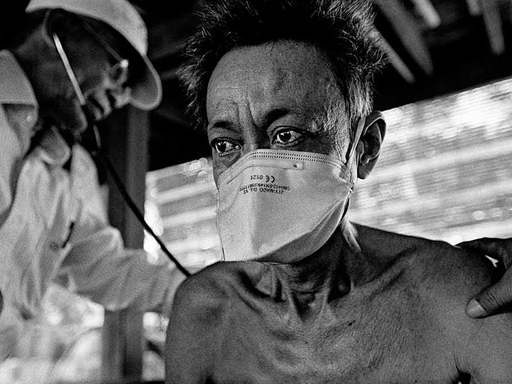
Photojournalist James Nachtwey sees his TED Prize wish come true, as we share his powerful photographs of XDR-TB, a drug-resistant strain of tuberculosis that's touching off a global medical crisis. Learn 3 quick ways to help at XDRTB.org. (Duration: 5:52.)
See James Nachtwey's powerful photographs on TED.com, where you can download this TEDTalk, rate it, comment on it and find other talks and performances from our archive of 300+ TEDTalks -- including more talks about Media That Matters.
Watch James Nachtwey make his TED Prize wish: "I'm working on a story that the world needs to know about. I wish for you to help me break it, in a way that provides spectacular proof of the power of news photography in the digital age."
Get TED delivered:
Follow the TED Prize on Twitter >>
Subscribe to the TEDTalks video podcast via RSS >>
Subscribe to the iTunes video podcast
Subscribe to the iTunes audio podcast
Get updates via Twitter >>Embed this video: Use this code to run the video on your own site:
-
2007 TED Prize winner James Nachtwey – April 4, 2007
Accepting his 2007 TED Prize, James Nachtwey talks about his decades as a photojournalist. A slideshow of his photos, beginning in 1981 in Northern Ireland, reveals two parallel themes in his work. First, as he says: "The frontlines of contemporary wars are right where people live." Street violence, famine, disease: he has photographed all these modern WMDs. Second, when a photo catches the world's attention, it can truly drive action and change. In his TED wish, he asks for help gaining access to a story that needs to be told, and developing a new, digital way to show these photos to the world. (Recorded March 2007 in Monterey, CA. Duration: 23:41)
NEW: Watch this talk in High Resolution (480P)
Download this talk: Audio (MP3) | Video (MP4)
| NEW! High-rez Video (MOV)More TEDTalks: TEDTalks website | iTunes (audio) | iTunes (video)
Blog this video: Use this code to run the video on your own site:
Subscribe to TEDTalks for free, automatic updates.
-
If you're in London ... do your bit for XDR-TB – October 8, 2008
Via Casson at the TED Prize blog (where there's lots more news about the XDRTB.org movement):
-
To stop XDR-TB, cure TB. To stop TB, cure poverty. – October 6, 2008
A powerful idea from the unveiling of James Nachtwey's photos of the XDR-TB epidemic on Friday night in New York City:
During the Q&A session with some TB experts and activists, an audience member asked: "We're talking about XDR-TB, but what about regular TB? What are we doing to cure that?"
Dr. Marcos Espinal of the Stop TB Project gave a direct answer:
"Cure poverty. Tuberculosis is a disease of the poor."
The list of specific risk factors for TB bears this out; you are more likely to catch TB if you are, for example, malnourished, living in crowded conditions or living in a refugee camp or shelter, or if you lack access to health care. It's a disease of the bottom billion. And so are TB's frightening new mutated forms, XDR-TB and MDR-TB -- because wiping out TB before it mutates costs ... $20.
To learn more, download these PDF factsheets about XDR-TB and MDR-TB and TB from the World Health Organization and its Stop TB Project. And find 3 quick ways to help at XDRTB.org -- such as signing a letter that will be sent directly to your country's leaders.
As Benjamin von Caspel wrote, when he told his friends about XDRTB.org via Twitter:
James Nachtwey's TED prize project has gone live - http://www.xdrtb.org/ - Yet another reason to remember the bottom billion matter.
Photo of Dr. Marcos Espinal courtesy of Robert Leslie. -
Trouble hitting SIGN on XDRTB.org? – October 5, 2008
We've heard from some users (and thank you, those who wrote in!) that the SIGN button on the XDRTB.org home page is not working. If you clicked on SIGN and nothing happened, you can try turning off your pop-up blocker, or use this direct link:
SIGN >>
to sign the petition and tell world leaders to take action on TB and XDR-TB. You'll first see a small window where you can choose your country, and then you'll be taken to a petition that will reach your country's leaders directly.
This petition really does make a difference -- on Friday, the first day of the XDRTB.org campaign, both John McCain and Barack Obama issued formal statements on what they'd do about TB if they were elected President of the United States.
-
James Nachtwey's photos projected around the world: pics! – October 4, 2008
The Flickr set James Nachtwey Projections 2008 collects photos from last night's worldwide photo event -- projecting James Nachtwey's powerful photos of XDR-TB in cities on all 7 continents. Nachtwey's photos of the growing XDR-TB epidemic, a deadly new mutation of tuberculosis, are meant to raise awareness of this disease. Because awareness is precisely what will help stop XDR-TB. Visit XDRTB.org to see James' photos and sign the petition (you may need to turn off your pop-up blocker).
And please add your photos of last night's event -- or of a screening you've organized on your own -- to the Flickr pool.
The photo above comes from the Emergency Room, which is tracking how this story breaks around the world, starting with bloggers and reaching throughout the media.
Follow the TED Prize on Twitter >>