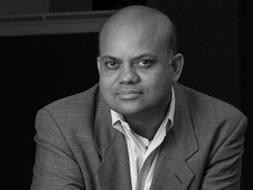
Speakers Iqbal Quadir: Founder, GrameenPhone

Iqbal Quadir is an advocate of business as a humanitarian tool. With GrameenPhone, he brought the first commercial telecom services to poor areas of Bangladesh. His latest project will help rural entrepreneurs build power plants.

Why you should listen to him:

As a kid in rural Bangladesh in 1971, Iqbal Quadir had to walk half a day to another village to find the doctor -- who was not there. Twenty years later he felt the same frustration while working at a New York bank, using diskettes to share information during a computer network breakdown. His epiphany: In both cases, "connectivity is productivity." Had he been able to call the doctor, it would have saved him hours of walking for nothing.

Partnering with microcredit pioneer GrameenBank, in 1997 Quadir established GrameenPhone, a wireless operator now offering phone services to 80 million rural Bangladeshi. It's become the model for a bottom-up, tech-empowered approach to development. "Phones have a triple impact," Quadir says. "They provide business opportunities; connect the village to the world; and generate over time a culture of entrepreneurship, which is crucial for any economic development."

"GrameenPhone has increased the country’s GDP by a far greater amount than repeated infusions of foreign aid. "
The New Nation

Email to a friend »

Blog Posts on TED

  • Time for time-shifted cellular? – October 18, 2005

    Big discovery for me this year is that the key enabling digital technology in the developing world is probably NOT the computer, but the cell-phone.
    1105ld1
    - TEDster Tom Standage wrote a brilliant cover story  in The Economist to this effect.
    - Iqbal Quadir's talk at TEDGLOBAL offered further powerful evidence via the astonishing story of Grameen Phone
    - and two eye-opening trips for me this year -- to Ethiopia and India -- further convinced me. In India everyone was using cell-phones, in Ethiopia, everyone wanted one.

    Today, the fantastic website worldchanging (which TED Prize winner Ed Burtynsky is supporting with one of his wishes) pointed me to research from Philips that could allow the introduction of yet cheaper communication devices -- modified MP3 players -- by using 'time-shifted' communication. Turns out you may be able to get much of the benefit of a cell-phone without having to communicate in real time. I LIKE this idea.... and the potential 'leapfrogging' it could enable.

    More »

  • Iqbal Quadir on TEDTalks: The impact one cell phone can make on a village... – October 10, 2006

    Iqbal Quadir

    Iqbal Quadir is co-founder of GrameenPhone, an innovative wireless company offering services to poor rural villages in Bangladesh. In this talk, he explains the triple impact of cell phone service in rural areas (connecting the village to the world, creating business opportunities, and generating over time a culture of entrepreneurship.) He also relates his personal "A-ha moment," when he understood that "connectivity is productivity." (Recorded July 2005 in Oxford, UK. Duration: 16:37)

    Download this talk: Audio (MP3) | Video (MP4)

    More TEDTalks: TEDTalks website | iTunes (audio) | iTunes (video)

    NEW: Read the transcript >>

    Blog this video: Use this code to run the video on your own site:

    Subscribe to TEDTalks for free, automatic updates.

    More »

  • Fair play for Kenya farmers' market – March 29, 2008

    Ode Magazine writes of the inspiring efforts of TEDGlobal Fellow and agriculture activist Thomas George to build fair-play marketplaces for poor farmers in Kenya. His organization, Vipani, is a resource for workers on small farms -- people without credit, connections or know-how -- to access networks of other farmers, buyers, suppliers and lenders. George's work -- which he plans to expand to Rwanda and Uganda -- will resonate with fans of Eleni Gabre-Madhin, who spoke on Ethiopian commodities markets at TEDGlobal Africa in 2007, and Iqbal Quadir, who talked about empowering communities by connecting farmers with mobile phones. "A thriving rural economy," says George, "will benefit not only farmers, but everyone in the community." -- Matthew Trost

    More »

  • Iqbal Quadir's new Center for Development and Entrepreneurship at MIT – November 13, 2007

    TEDGLOBAL2005 speaker and GrameenPhone founder Iqbal Quadir is launching a new center for Development and Entrepreneurship at MIT, thanks to a $50 million structured gift from Legatum, a Dubai-based investment firm. The Legatum Center "will help MIT students start enterprises in developing countries, to foster organic and durable economic growth and more equitable societies", Iqbal told us in an e-mail. He will act as the Center's Exec Director, while Prof. Alex Pentland, Director of the Human Dynamics research group at the MIT Media Lab, will be the Faculty Director. "We will champion bottom-up economic growth, rather than the prevalent top-down, state-led, aid-funded projects that by and large have not worked", Iqbal added. That was also at the core of his TEDGLOBAL2005 talk (on this topic, watch also the talks by Ashraf Ghani and Jacqueline Novogratz or several speakers from TEDGLOBAL2007 in Arusha). The Center's primary activity (starting next Fall) will be running a fellowship program for MIT students who intend to create scalable, socially responsible enterprises.

    More »

  • CARE Turns Down Federal Money for Aid and Turns to Investing – August 20, 2007

    TEDsters have already heard this story -- from speakers Iqbal Quadir, Ngozi Okonjo-Iweala, Ashraf Ghani, Jacqueline Novogratz, and several others at last June's TEDGLOBAL in Tanzania: developing countries need investments more than aid. One of the world's biggest charities has now acted upon this idea. CARE, writes the New York Times, is turning down some $45 million a year in US federal financing, saying American food aid is not only plagued with inefficiencies, but also may hurt some of the very poor people it aims to help. CARE says it will phase out by 2009 the practice of selling state-subsidized American farm products in African countries that in some cases compete with the crops of struggling local farmers (watch Jacqueline's speech for a parallel take on how donated clothes compete with local textile production). The move is controversial -- other charities are defending the current system -- but CARE has already started investing in local companies. Read the full NYT story.

    More »

  • Jan Chipchase's quest – April 12, 2008

    13anth.large2.jpg

    Photo: Shaul Schwarz/Reportage, for The New York Times. Copyright 2008 The New York Times Company The New York Times Magazine recently tagged along with Nokia researcher Jan Chipchase and got an arresting look at the impact of mobile phones in the Third World. Chipchase, a "user anthropologist," spoke at TED in 2007 to talk about how Third World users have transformed their mobile devices: they've become fixed identity points inside fluctuating populations, channels for entrepreneurship amid poverty, pocket-sized Western Unions. Many Ugandans, he points out, use prepaid airtime as a way of transferring money. (And during the recent Kenyan crisis, donations to the Kenyan Red Cross could be made in the form of minutes, as noted by TEDGlobal fellow Afromusing.) Part ethnographer, part marketing agent, Chipchase's work reveals the fundamentals of human character across cultures -- and is helping shape next-gen product design to match local needs. Read the story in print this weekend or online now >> There's another TED connection in this story: Watch Iqbal Quadir's talk about GrameenPhone, an outgrowth of the GrameenBank devoted to building mobile networks in the developing world. -- Matthew Trost

    More »