Speakers Ashraf Ghani: Expert on state-building

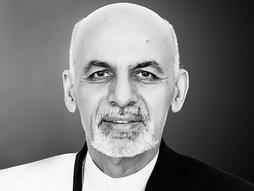
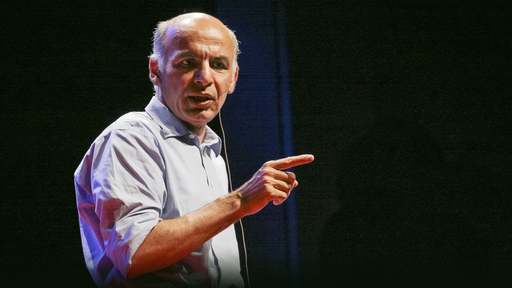
Ashraf Ghani was a key figure in rebuilding Afghanistan after the fall of the Taliban, and is a leading advocate for foreign investment (rather than foreign aid) as a tool for economic development and the eradication of poverty.

Why you should listen to him:

Before Afghanistan's President Karzai asked him, at the end of 2001, to become his adviser and then Finance Minister, Ashraf Ghani had spent years in academia studying state-building and social transformation, and a decade in executive positions at the World Bank trying to effect policy in these two fields. In just 30 months, he carried out radical and effective reforms (a new currency, new budget, new tariffs, etc.) and was instrumental in preparing for the elections of October 2004.

In 2006, he was a candidate to succeed Kofi Annan as Secretary General of the United Nations. He's currently the Chancellor of Kabul University, where he runs a program on state effectiveness. His message to the world: "Afghanistan should not be approached as a charity, but as an investment."

With Clare Lockhart, he runs the Institute for State Effectiveness, which examines the relationships among citizens, the state and the market. The ISE advises countries, companies and NGOs; once focused mainly on Afghanistan, its mission has expanded to cover the globe.

"Ghani's management skills, which sparked an economic revival in post-Taliban Afghanistan, earned him Asia's vote as the best finance minister on the continent."
The New York Sun

Email to a friend »

Blog Posts on TED

  • Ashraf Ghani on fixing failed states: New BBC interview – July 30, 2008

    TED.com commenter David Smith points us to this new interview with Ashraf Ghani, available as a podcast from the BBC World Service. Ghani (watch his TEDTalk) is the co-author of the new book Fixing Failed States -- a subject he learned firsthand as a reformer in post-Taliban Afghanistan. Interviewer Peter Day of the program Global Business asks Ghani, "How do we define a failed state?" From the interview:

    Peter Day: If I were seeking some sort of layperson's response to the failed state idea, I'd say it's a kind of measurement of the amount of despair there is in a place.

    Ashraf Ghani: Despair is definitely the most important. Because when there is hope -- and between 2001-2005 in Afghanistan there was enormous hope -- that hope becomes the ground to build the foundation.


    More »

  • Iqbal Quadir's new Center for Development and Entrepreneurship at MIT – November 13, 2007

    TEDGLOBAL2005 speaker and GrameenPhone founder Iqbal Quadir is launching a new center for Development and Entrepreneurship at MIT, thanks to a $50 million structured gift from Legatum, a Dubai-based investment firm. The Legatum Center "will help MIT students start enterprises in developing countries, to foster organic and durable economic growth and more equitable societies", Iqbal told us in an e-mail. He will act as the Center's Exec Director, while Prof. Alex Pentland, Director of the Human Dynamics research group at the MIT Media Lab, will be the Faculty Director. "We will champion bottom-up economic growth, rather than the prevalent top-down, state-led, aid-funded projects that by and large have not worked", Iqbal added. That was also at the core of his TEDGLOBAL2005 talk (on this topic, watch also the talks by Ashraf Ghani and Jacqueline Novogratz or several speakers from TEDGLOBAL2007 in Arusha). The Center's primary activity (starting next Fall) will be running a fellowship program for MIT students who intend to create scalable, socially responsible enterprises.

    More »

  • TED.com's new discussion space: Africa: The Next Chapter – May 30, 2007

    As the TED Conference team departs for Tanzania and TEDGlobal 2007, the TED.com team is beginning the conversation online, with our latest theme: Africa: The Next Chapter. We start with an observation: That while we're all familiar with Africa's challenges -- famine and disease, conflict and corruption -- it's less known that across the continent, change is afoot. A new generation of Africans -- entrepreneurial, optimistic, inventive, undaunted -- are shaping a very different future for the their homeland.

    Ingenious solutions are being applied to tackle some of the toughest health and infrastructure problems. Businesses are being launched that can transform the lives of millions. New communication technologies allow ideas and information to spread, enabling markets -- and governments -- to be more efficient. The numbers suggest that real growth is on the way ... A new Africa beckons.

    Next week, we hold our first conference in Africa (also titled "Africa: The Next Chapter") to learn all we can about the profound changes sweeping the continent. Thought leaders from across Africa will gather with counterparts from the west in hopes of building new and lasting collaborations. But the meeting in real time is only the beginning: It's the conversations and connections that continue online which will have even deeper reverberations.

    Though the talks from TEDGlobal won't be online till midsummer, we've started the conversation off with several relevant talks from TEDs past, including Ngozi Okonjo-Iweala, the pioneering Nigerian Finance Minister, who captures the zeitgeist of the moment with a talk on rethinking the African economy. It dovetails nicely with Jacqueline Novogratz, who promotes a new approach to philanthropy, based on investment rather than traditional aid. Both those thoughts were echoed by Ashraf Ghani, former Finance Minister of Afghanistan, whose rousing talk on his country's future resonates with this theme, despite geographical distance. And then there's Bono, whose memorable 2005 TED Prize acceptance speech was the original inspiration for the conference (though many there may disagree with his approach).

    Click here to go to TED.com's new Theme, Africa: The Next Chapter >>

    More »

  • Thomas Barnett's bracing talk on the future of war, on TED.com – June 14, 2007

    Strategic planner Thomas P.M. Barnett has advised US leaders on national security since the end of the Cold War. In this bracingly honest -- and very funny -- talk, Barnett outlines a solution for the foundering US military: Break it in two. One half makes war, and the other half builds the peace that follows. Spontaneous applause and a standing ovation underscore what Barnett said on his blog: "Probably the best 20 minutes of speaking I have ever done." (Recorded February 2005 in Monterey, CA. Duration: 23:53) Read Thomas Barnett's profile on TED.com


    Embed this video: Use this code to run the video on your own site:


    Watch this talk on TED.com where you can download it, rate it, comment on it and find other talks and performances.

    More »

  • CARE Turns Down Federal Money for Aid and Turns to Investing – August 20, 2007

    TEDsters have already heard this story -- from speakers Iqbal Quadir, Ngozi Okonjo-Iweala, Ashraf Ghani, Jacqueline Novogratz, and several others at last June's TEDGLOBAL in Tanzania: developing countries need investments more than aid. One of the world's biggest charities has now acted upon this idea. CARE, writes the New York Times, is turning down some $45 million a year in US federal financing, saying American food aid is not only plagued with inefficiencies, but also may hurt some of the very poor people it aims to help. CARE says it will phase out by 2009 the practice of selling state-subsidized American farm products in African countries that in some cases compete with the crops of struggling local farmers (watch Jacqueline's speech for a parallel take on how donated clothes compete with local textile production). The move is controversial -- other charities are defending the current system -- but CARE has already started investing in local companies. Read the full NYT story.

    More »

  • Four new books by TEDGLOBAL 2005 speakers – July 21, 2008

    tedglobalbooks.jpg

    Four of the speakers that participated in the first TEDGLOBAL in Oxford (July 2005) have all published new books recently. Former Afghani minister and head of Kabul University Ashraf Ghani (watch his TEDtalk), together with Clare Lockhart, has penned "Fixing Failed States: A Framework For Rebuilding A Fractured World". They discuss the "between forty and sixty nations" -- that's one-quarter of all the countries in the world -- that are broken to various degreees and have become "the breeding ground of networks of criminality and terror", and suggest an integrated state-building approach that goes beyond military intervention and humanitarian aid to make them "stakeholders in a global system". It's a radically optimist book. Since Ghani spoke at TEDGLOBAL, he and Lockhart have co-created the Institute for State Effectiveness. In "We Think: Mass Innovation, Not Mass Production", British innovation and creativity guru Charles Leadbeater (watch his TEDtalk) makes the case, based on countless well-documented examples from all over the world, that innovation in the era of the Web has become a collective, collaborative effort. "You are what you share", he writes. Walking his talk, he shares part of the final book and the full first draft on his website. Groups of people increasingly coming together to share, work or take public action are also the starting point for Clay Shirky's new book "Here Comes Everybody: The Power Of Organizing Without Organizations". The social-media master (watch his TEDtalk) contends that "when new technology appears, previously impossible things start occurring". For example: "We are used to a world where little things happen for love and big things happen for money. Love motivates people to bake a cake and money motivates people to make an encyclopedia. Now, though, we can do big things for love". The reference, obviously, is to Wikipedia, which is just one of many examples used by Shirky. Recently, he told me that the book somehow was born at TEDGLOBAL 2005: "That speech was the opportunity to link a lot of my earlier work into a coherent structure". He's blogging and discussing the book at HereComesEverybody.org. Carl Honoré's previous bestseller "In Praise Of Slow" discussed our culture obsessed with speed (that's the topic of his TEDtalk). In his new book, "Under Pressure: Rescuing Childhood From The Culture Of Hyper-Parenting", he applies that lens to growing up in today's developed societies, and says that we are raising "a generation of overprogrammed, overachieving, exhausted children". Based on extensive research -- fact after example after anecdote (including that of the father of a tennis player who drugged his child's opponents) -- and beautifully written, "Under Pressure" is not a parenting manual. "Slow", in the meantime, has built up to somewhat a global movement, and Carl is one of the co-founders of a website for all things slow, Slow Planet. Where they remind us that "slow is not about doing everything at a snail's pace; it's about working, playing and living better by doing everything at the right speed". The next TEDGLOBAL will take place in Oxford, 21-24 July 2009. More details will be forthcoming in September. (Note: Some of the cover images above may be different from what you will find online or at your local bookstore, depending on the different country-specific editions of each book.)

    More »

Ashraf Ghani on the Web

Bookmark this speaker

Related Speakers

Related themes

Conferences

  • TEDGlobal 2005