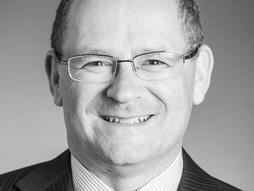
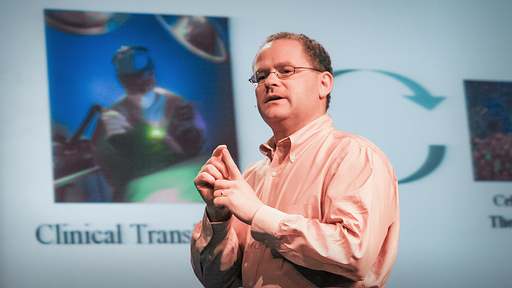
In the fight against disease, defect and injury, Alan Russell has a novel argument: Why not engineer new tissue and organs to replace sick ones?
Why you should listen
Alan Russell is a professor of surgery -- and of chemical engineering. In crossing the two fields, he is expanding our palette of treatments for disease, injury and congenital defects. We can treat symptoms, he says, or we can replace our damaged parts with bioengineered tissue. As he puts it: "If newts can regenerate a lost limb, why can't we?"
The founding director of the McGowan Institute for Regenerative Medicine, at the University of Pittsburgh, Russell leads an ambitious biomedicine program that explores tissue engineering, stem cell research, biosurgery and artificial and biohybrid organs. They've also started testing a new kind of heart pump, figured out that Botox can help with enlarged prostate, and identified human adipose cells as having the possibility to repair skeletal muscle. In his own Russell Lab, his team has studied antimicrobial surfaces and helping to develop a therapy to reduce scarring on muscle after injury. Lately, his lab is involved in biotechnology studies in relation to chemical and biological weapons defense.
He's also co-founder of Agentase, a company that makes an enzyme-based detector for chemical warfare agents.
What others say
“Russell's own research, a blend of biotech and chemical engineering, is directed at finding ways to put biological molecules into everyday materials.” — Pittsburgh Post-Gazette