A historian and philosopher of science, George Dyson takes a clear-eyed and deeply researched view of our recent scientific past -- while showing where it may lead us.
Why you should listen to him:
A member of the fabulous Dyson clan, George Dyson is sometimes defined as a son-of and a brother-of, but he has found his own voice as a chronicler and a philosopher of science and the future. The son of physicist Freeman Dyson, George grew up inside one of the most fervid hotbeds of scientific research in the Atomic Age. He spent his early adulthood living in a treehouse, and designing and building Aleutian kayaks (chronicled in his book Baidarka: The Kayak). While he maintains his kayak business now, his parallel interest in science and the future has brought him to the fore.
His 1997 book Darwin Among the Machines made a case for the Internet as a growing organism, an evolving life force. In 2002, he published a story from his extraordinary childhood, Project Orion, about the drive to build a nuclear-powered rocket aimed at Saturn. He's currently writing and researching on the history and future of computing -- speaking recently on von Neumann -- and he continues to build and design kayaks.
Blog Posts on TED
-
The birth of the computer: George Dyson on TED.com – June 17, 2008
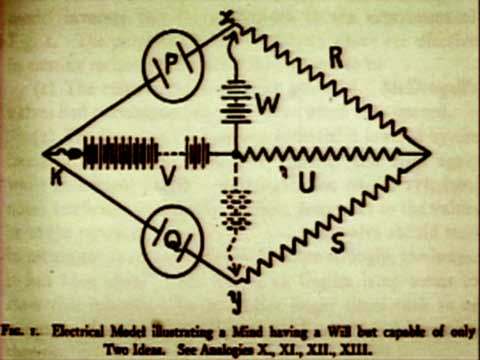
Historian George Dyson tells stories from the birth of the digital computer -- from its 16th-century origins to the hilarious notebooks of the first computer engineers. Dyson, a dedicated archivist and crate-digger, has found some stories that haven't been told for 50 years. For instance: in the files of Nils Aall Barricelli, the genius who created the first artificial life within these just-born machines, Dyson found the punchcards containing Barricelli's creatures -- on the verge of being thrown in the trash. Patting the box of cards now, Dyson wonders, would they like to come alive again? (Recorded February 2003 in Monterey, California. Duration: 17:19.)
Watch George Dyson's talk on TED.com, where you can download it, rate it, comment on it and find other talks and performances -- including Dyson's 2002 talk on Project Orion, a plan to send a nuclear-powered rocket to Saturn.
Read more about George Dyson on TED.com.
Embed this video: Use this code to run the video on your own site:
-
Psychology's final frontier: Staying sane in space – August 24, 2008
Astrobiology Magazine posts an intriguing report today: The American Psychological Association is looking seriously at the question of astronauts' mental health. It's an issue that has sometimes been swept under the rug, says the APA's press release:Historically, astronauts have been reluctant to admit to mental or behavioral health problems for fear of being grounded.
But as missions get longer and astronauts are asked to do more, psychologists are looking at ways to help them cope with loneliness and interpersonal conflicts. At Beth Israel Deaconess in Boston, psychologist James Carter (who also studies teamwork in space) and his group are building a tool to help astronauts deal with depression:
... a suite of interactive computer programs, dubbed the Virtual Space Station, using input from 13 veteran long-duration NASA astronauts who have flown on the International Space Station, Mir and Skylab. ... This interactive program will help astronauts prevent, detect, assess and manage their own psychosocial problems. They will learn how to cope with depression and how to resolve conflicts with other astronauts.
Read more about Carter's project >> Having trouble leaving a comment? (We're working on it ...) Email it to us: blog at ted dot com
-
"Engineers' Dreams": A short story by George Dyson – July 15, 2008
Today, Edge 250 publishes a new short story by science historian George Dyson. A born storyteller (watch his TEDTalks on Project Orion and the earliest digital computers), he uses the short story as a persuasive tool -- or so Stewart Brand suggests in his foreword:
How does one come to a new understanding? The standard essay or paper makes a discursive argument, decorated with analogies, to persuade the reader to arrive at the new insight.
The same thing can be accomplished -- perhaps more agreeably, perhaps more persuasively -- with a piece of fiction that shows what would drive a character to come to the new understanding.
It gives nothing away to share this eye-opening line from the story:
Are we searching Google, or is Google searching us?
Read George Dyson's short story, "Engineers' Dreams," on Edge.com >>
-
The Lonely Interplanetary guide to scuba diving – August 1, 2008
Bored with Earthly beach destinations this summer? Does the word "Carribbean" not ring exactly, well, "exotic" these days? With this week's news that (highly acidic) water has been tasted on Mars and an ethane lake has been discovered on Saturn's moon Titan, perhaps it's time to investigate otherworldly destinations for fun in the surf. Grab your ultraviolet-shielded swimming gear and a good beach read (say, Project Orion by George Dyson, who spoke at TED in 2003), hop aboard Virgin Galactic's newly unveiled SpaceShipTwo, and cruise to these astonishing natural satellites orbiting Jupiter and Saturn, where summer never comes:
Tidally bound to face its mother planet, Europa consistently offers breathtaking views of Jupiter's turbulent atmosphere, while its breezy hardly-there chemise of molecular oxygen is delicate enough to leave the magnificent sight unobstructed. (But, beware the occasional barrage of comets yanked in by Jupiter's gravity.) Adventurers wishing to forgo Europa's "spa experience" will be at home, too: drill through miles of icy crust to access this satellite's vast subsurface ocean of liquid saltwater -- and whatever may lurk there.
Unlike visitors to other Jovian moons, sailors to Callisto can leave their ionizing radiationscreen at home: though excessively pockmarked by impacts, its outer orbit saves it from the effects of Jupiter's monstrous magnetosphere. Hiking enthusiasts can traverse its gigantic basin of concentric rings, Valhalla, spanning 600 kilometers, kicking through wisps of condensed oxygen. This moon's lack of tectonic activity makes for easy access to its likely ocean of liquid saltwater. (Robert Ballard has made the case that Earth's own oceans are still deeply mysterious.)
Athletes and thrill-seekers delight at Enceladus' suite of extreme winter features and low gravity: spirally slalom the slopes of its unforgettable impact craters; gawk at the ivory, propane-scented violence of erupting cryovolcanoes as the panorama of Saturn's rings sets below the horizon; bobsled along thousand-mile escarpments of fresh chemical ice. Meanwhile, geology geeks can enjoy exploring this highly reflective moon's incredible tectonic scars and stripes. But let divers beware: the existence of a liquid subsurface is only speculative.
Titan's atmosphere, unique among moons, makes it a mysterious entity among other natural satellites and an attractive destination for Saturn-bound families seeking an exotic experience without patent danger (asteroid strikes are rare). Visitors willing to endure its unusual weather -- the nitrogen-humid nights with the sky awash in orange; monsoons of methane and other hydrocarbons -- will be rewarded by its Earth-like terrain: newly discovered lakes of ethane, vast sand dunes, a probable ocean of water-ammonia under the surface, and perhaps even microbial life. (Get your vaccinations!)
Our solar system is truly a cornucopia of enchanting and enigmatic phenomena. Make sure your frequent-flyer miles go to good use on your next trek by studying TEDTalks by Carolyn Porco, Bill Stone, George Dyson, Freeman Dyson and other adventurers. -- Matthew Trost


